AP European History Unit 2

Age of Reformation (c. 1450 to c. 1648)

History is a public good. Help us keep it that way.

World History Encyclopedia makes reliable history content freely available to all. Your year-end gift helps keep historical knowledge free from paywalls and accessible to learners everywhere.

$481 / $20000
Jan van der Crabben
by
published on
bookmark_addbookmark_addedSave Curriculum Collection

Between 1450 and 1648, the religious unity of Western Christendom broke apart. In 1517, Martin Luther's challenge to the Church selling indulgences spread rapidly by the printing press. It set off a Reformation that soon produced rival visions of the faith and helped spark the German Peasants' War. Some rulers across Europe took control of religion, as Henry VIII did in England. Meanwhile, confessional rivalries fuelled the French Wars of Religion, the Dutch revolt against Spain, and the Thirty Years' War, which ended with the Peace of Westphalia in 1648. The Catholic Church answered with the Council of Trent and the Jesuits, while debates over marriage, family, and women's roles reshaped everyday life.

This collection collates articles, definitions, maps, and infographics covering Unit 2: Age of Reformation of the AP® European History curriculum, which accounts for 10-15% of the exam and around 15 class periods. It offers an overview for teachers and students alike, providing the materials needed to explore how the Protestant and Catholic reformations transformed belief, politics, and society, and how religious conflict reshaped the balance of power in Europe.

Unit 2 covers eight topics: 2.1 Contextualizing 16th- and 17th-Century Challenges and Developments · 2.2 Luther and the Protestant Reformation · 2.3 Protestant Reform Continues · 2.4 Wars of Religion · 2.5 The Catholic Reformation · 2.6 16th-Century Society and Politics · 2.7 Art of the 16th Century: Mannerism and Baroque Art · 2.8 Causation in the Age of Reformation and the Wars of Religion

Our encyclopedia's current coverage is strongest on the Protestant reformers, the English Reformation, and the Catholic response, and includes a wide selection of primary sources from the period. We are still expanding our coverage of 16th-century social history, including popular culture and the European witch hunts, and of Mannerist and Baroque art.

⬇️ Scroll down to see the collection!

Ideas for Teachers

  • Luther goes viral: Have students read the article Medieval Indulgence & Martin Luther to understand what indulgences promised and how Johann Tetzel sold them. Ask them to list three of Martin Luther's 95 Theses that attack the practice. Using The Printing Press & the Protestant Reformation, discuss how the Theses became a bestseller within a year, even though most people heard pamphlets read aloud rather than reading them themselves.
  • How far should reform go? Ask your students to compare the Huldrych Zwingli article with Blaurock's Origin of the Anabaptists. It explains why the founders of the Swiss Brethren broke with Zwingli over infant baptism. Then have them read the German Peasants' War to determine how Luther urged the nobility to crush the rebels. Discuss why reformers who had defied Rome turned against more radical movements.
  • Crowns and churches: Have students contrast the English Reformation, from Henry VIII's Act of Supremacy in 1534 through Mary I's reversal and Elizabeth I's settlement, with Henry IV of France & the Edict of Nantes. Henry IV converted to Catholicism in 1593 and granted Protestants protections in 1598. Debate: Did imposing a single faith or allowing limited toleration better serve each ruler?
  • Reform or reaction? Using the Council of Trent article, ask students to sort the council's decisions into those that reformed abuses and those that reaffirmed the Church's authority or condemned Protestant teaching. Then add the Ignatius of Loyola and Index of Prohibited Books articles – ask which tools of the Catholic Reformation relied on education and which on control.
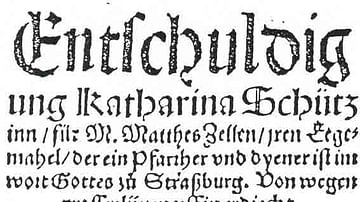
  • Women and the Reformation: Ask students to read Ten Women of the Protestant Reformation, which explains how the closing of convents removed one path for women while freeing others who had been forced into religious life. Compare Katharina Zell's 1524 letter defending her marriage to a priest with John Knox on Female Leadership. Discuss: Did the Reformation widen or narrow women's roles?
  • From Augsburg to Westphalia: Have students compare the Map of the Dominant Religions in Europe, 16th Century with the Map of Europe at the Peace of Westphalia, 1648. Using the Peace of Westphalia and Thirty Years' War articles, ask them to explain what the 1555 Peace of Augsburg settled and why it failed to keep the peace. Then ask what principle of state sovereignty emerged in 1648.

Browse the collection below to find materials that fit your teaching style and feel free to adapt them to your students. Note that our articles are print-friendly, and there is a PDF export button on each article page.

AP® and Advanced Placement® are trademarks registered by the College Board, which is not affiliated with, and does not endorse, this collection.

Articles & Definitions

Protestant Reformation
Definition

Protestant Reformation

The Protestant Reformation (1517-1648) refers to the widespread religious, cultural, and social upheaval of 16th-century...
Charles V, Holy Roman Emperor
Definition

Charles V, Holy Roman Emperor

Charles V, Holy Roman Emperor (24 February 1500 to 21 September 1558) reigned from 1519 until his abdication in 1556...
Medieval Indulgence & Martin Luther
Article

Medieval Indulgence & Martin Luther

The medieval indulgence was a writ offered by the Church, for money, guaranteeing the remission of sin, and its...
Martin Luther
Definition

Martin Luther

Martin Luther (l. 1483-1546) was a German priest, monk, and theologian who became the central figure of the religious and cultural...
Martin Luther's 95 Theses
Article

Martin Luther's 95 Theses

Martin Luther's 95 Theses of 31 October 1517, although they have since come to represent the beginning of the Protestant...
The Printing Press & the Protestant Reformation
Article

The Printing Press & the Protestant Reformation

The printing press, credited to the German inventor and printer Johannes Gutenberg (l. c. 1398-1468...
Huldrych Zwingli
Definition

Huldrych Zwingli

Huldrych Zwingli (l. 1484-1531) was a Swiss priest who became the leader of the Protestant Reformation in the region at the same...
Blaurock's Origin of the Anabaptists
Article

Blaurock's Origin of the Anabaptists

George Blaurock (l. c. 1491-1529) was one of the three founders of the Swiss Brethren (known by their opponents...
German Peasants' War
Definition

German Peasants' War

The German Peasants' War (1524-1525) was a conflict between the lower class of the Germanic region of the Holy Roman Empire...
John Calvin
Definition

John Calvin

John Calvin (l. 1509-1564) was a French Reformer, pastor, and theologian considered among the greatest of the Protestant Reformation...
Henry VIII of England
Definition

Henry VIII of England

Henry VIII of England ruled as king from 1509 to 1547. The second Tudor king after his father Henry VII of England (r. 1485-1509...
English Reformation
Definition

English Reformation

The English Reformation began with Henry VIII of England (r. 1509-1547 CE) and continued in stages over the rest of the 16th...
Elizabeth I of England
Definition

Elizabeth I of England

Elizabeth I reigned as queen of England from 1558 to 1603. Her 44-year reign was so long and packed with momentous events...
French Wars of Religion
Definition

French Wars of Religion

The French Wars of Religion (1562-1598) were a series of eight conflicts between Protestant and Catholic factions in France...
Catherine de' Medici
Definition

Catherine de' Medici

Catherine de' Medici (l. 1519-1589) was the queen of France, mother of three kings and two queens and, between 1559 and c...
Henry IV of France & the Edict of Nantes
Article

Henry IV of France & the Edict of Nantes

Henry of Navarre became the nominal ruler of France after the assassination of Henry III of France (r. 1574-1589...
Reformation in the Netherlands & the Eighty Years' War
Article

Reformation in the Netherlands & the Eighty Years' War

The Protestant Reformation in the Netherlands was among the most violent and destructive of any...
Spanish Armada
Definition

Spanish Armada

The 1588 Spanish Armada was a fleet of 132 ships assembled by King Philip II of Spain (r. 1556-1598) to invade England, his 'Enterprise...
Thirty Years' War
Definition

Thirty Years' War

The Thirty Years’ War (1618-1648) was the last major European conflict informed by religious divisions and one of the most devastating...
Peace of Westphalia
Definition

Peace of Westphalia

The Peace of Westphalia, the name given to the multiple treaties, marked the conclusion of the Thirty Years' War. Signed on...
Counter-Reformation
Definition

Counter-Reformation - The Catholic Establishment of Ultimate Truth

The Counter-Reformation (also known as the Catholic Reformation, 1545 to c. 1700) was...
Council of Trent
Definition

Council of Trent

The Council of Trent (1545-1563) was a meeting of Catholic clerics convened by Pope Paul III (served 1534-1549) in response to...
Ignatius of Loyola
Definition

Ignatius of Loyola

Ignatius of Loyola (l. 1491-1556) was a Basque soldier who became a Catholic priest and theologian after a mystical experience...
Index of Prohibited Books
Article

Index of Prohibited Books - The Banned Books of the Catholic Church

The Index of Prohibited Books (Index Librorum Prohibitorum) was a list of written works...
Ten Women of the Protestant Reformation
Article

Ten Women of the Protestant Reformation

Women played a vital role in the Protestant Reformation (1517-1648) not only by supporting the major reformers...
Katharina Zell's Defending Clerical Marriage
Article

Katharina Zell's Defending Clerical Marriage

Defending Clerical Marriage (1524) is an open letter by reformer and theologian Katharina Zell (nee Schütz...
John Knox on Female Leadership
Article

John Knox on Female Leadership

The rule of women in government and ministry has long been a source of controversy in the Christian Church. Beginning...
Sofonisba Anguissola
Definition

Sofonisba Anguissola - The Founder of Feminist Art

Sofonisba Anguissola (c. 1532-1625) was an Italian Renaissance painter from Cremona who achieved considerable...
Tintoretto
Definition

Tintoretto

Tintoretto (c. 1518-1594 CE), real name Jacopo Robusti, was an Italian Renaissance artist who specialised in religious, mythological...
no image
Article

Interview: Dr. Bastian Eclercy on Guido Reni at the Städel Museum, Frankfurt

Misunderstood, neglected, forgotten. The Städel Museum in Frankfurt, Germany is...
Subscribe to this author

About the Author

Free for the World, Supported by You

World History Encyclopedia is a non-profit organization. Please support free history education for millions of learners worldwide for only $5 per month by becoming a member. Thank you!
Become a Member  

History should be free for everyone!

If you find World History Encyclopedia helpful, a $10 contribution helps keep trusted history free and accessible to millions of readers and students worldwide. Thanks for making a difference!

Support Us Remove Ads