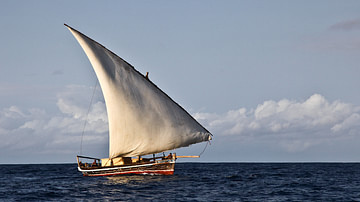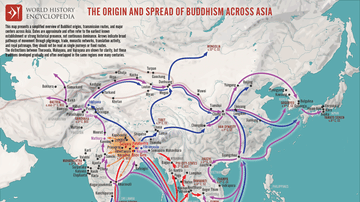

Between 1200 and 1450, the trade networks linking Afro-Eurasia intensified and reached further than ever before. The Silk Roads carried silk, porcelain, and paper westward across Central Asia. For a short time, Mongol conquest placed much of the landmass under a single authority and made the routes safer to travel. In the Indian Ocean, monsoon winds drove a maritime trade connecting East Africa, Arabia, India, and China, while camel caravans crossed the Sahara carrying gold north and salt south. Along with goods came religions, technologies, crops, and disease — including the plague that would kill a substantial proportion of Eurasia's population.
This collection collates articles, definitions, and maps covering Unit 2: Networks of Exchange of the AP® World History: Modern curriculum, which accounts for 8–10% of the exam and around 10–13 class periods. It offers an overview for teachers and students alike, providing the materials needed to explore how goods, ideas, and people moved between distant regions of the world during this period.
Unit 2 covers six topics: 2.1 The Silk Roads · 2.2 The Mongol Empire and the Making of the Modern World · 2.3 Exchange in the Indian Ocean · 2.4 Trans-Saharan Trade Routes · 2.5 Cultural Consequences of Connectivity · 2.6 Environmental Consequences of Connectivity
⬇️ Scroll down to see the collection!
Ideas for Teachers
- Two-way Silk Road trade: Have your students list the goods moving west to east and in the opposite directions, as listed in the Silk Road article. Then discuss why paper and gunpowder had a greater impact on world history than silk itself.
- Mongol Empire flowchart: Ask students to create a flowchart based on the information found in the Mongol Empire and Kublai Khan articles, showing the effect of the Mongols' policies on trade (yam postal system, tax incentives for merchants, paper money, road building, etc.).
- Compare ocean trade networks: Have students read the Kilwa and the Seven Voyages of Zheng He articles side by side and compare what each of them reveals about Indian Ocean trade networks.
- Trans-Saharan gold & salt trade: Based on the articles Mansa Musa I, Timbuktu, and The Camel Caravans of the Ancient Sahara, ask your students to explain the importance of camel caravans for trans-Saharan trade, as well as its importance.
- Primary source analysis: Ask your students to pick either the Ibn Battuta or the Margery Kempe article to identify the primary author's point of view, the purpose of their writing, and who their likely audience would have been.
- Trade routes & the Black Death: Use the Black Death article and the Map of the Trade Networks in the Middle Ages to have students trace how said trade networks may have carried the plague from Asia into Europe.
Browse the collection below to find materials that fit your teaching style and feel free to adapt them to your students. Note that our articles are print-friendly, and there is a PDF export button on each article page.
AP® and Advanced Placement® are trademarks registered by the College Board, which is not affiliated with, and does not endorse, this collection.