


Throughout history, writing and other recording systems allowed societies to preserve information about administration, trade, religion, and political life. Many systems have been successfully deciphered, but others remain unread, only partly understood, or debated as forms of writing. These twelve examples range from Neolithic Europe to the medieval and early modern Pacific and Americas.
- Vinča Symbols (c. 5300–4000 BCE) – hundreds of signs from southeastern Europe whose status as writing or proto-writing remains debated.
- Proto-Elamite (c. 3200–2900 BCE) – an early administrative script from Iran preserved on around 1,600 clay tablets but still not fully deciphered.
- Indus Script (c. 2600–1900 BCE) – thousands of short inscriptions from the Indus Valley Civilization, whose language and sign system remain unknown.
- Linear A (c. 1800–1450 BCE) – the principal undeciphered script of Minoan Crete, preserved on tablets, vessels, and religious objects.
- Byblos Syllabary (c. 1800–1400 BCE) – a small group of inscriptions from the Levant whose underlying language and writing system remain uncertain.
- Cypro-Minoan (c. 1550–1050 BCE) – a Bronze Age Cypriot script known from tablets, pottery, and seals but not securely deciphered.
- Tartessian Script (c. 700–500 BCE) – a Paleohispanic writing system from southern Iberia whose signs can partly be read but whose language remains poorly understood.
- Isthmian Script (c. 500 BCE–500 CE) – an Epi-Olmec writing system from the Gulf Coast of Mexico for which proposed decipherments remain disputed.
- Meroitic Script (c. 300 BCE–400 CE) – the script of the Kingdom of Kush can largely be transliterated, but the Meroitic language remains only partly understood.
- Khitan Scripts (10th–12th centuries CE) – two writing systems created for the Khitan language of northern China and Inner Asia that remain only partially deciphered.
- Quipu / Khipu (c. 600–1532 CE) – Andean knotted-cord records used extensively by the Inca Empire; whether some encoded language as well as numerical information remains debated.
- Rongorongo (c. 1200–1860s CE) – the enigmatic glyphic system of Rapa Nui, preserved on a small number of wooden objects and still undeciphered.
Deciphering or better understanding these systems could reveal languages, political institutions, religious beliefs, economic networks, and historical traditions known today largely through archaeology. Together, they illustrate both the extraordinary diversity of human information systems and the substantial gaps that remain in our understanding of societies across Africa, Asia, Europe, Oceania, and the Americas.
About the Author
Related Images

Clay Tablet with Linear A Script

Linear A Script

Luwian Hieroglyphs in Hattusa
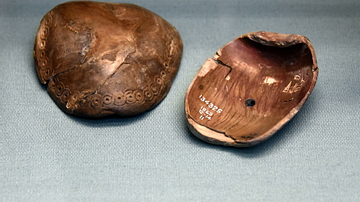
Shell Clappers with Luwian Hieroglyphs

The Development of Slavonic Literacy & the Cyrillic Alphabet - The Cultural Transformation of Eastern Europe, c. 863-900

Linear B tablet
Cite This Work
APA Style
Netchev, S. (2026, August 24). 12 Ancient Scripts We Still Cannot Read: Undeciphered Scripts & Lost Languages of the Ancient World. World History Encyclopedia. https://www.worldhistory.org/image/22039/12-ancient-scripts-we-still-cannot-read/
Chicago Style
Netchev, Simeon. "12 Ancient Scripts We Still Cannot Read: Undeciphered Scripts & Lost Languages of the Ancient World." World History Encyclopedia, August 24, 2026. https://www.worldhistory.org/image/22039/12-ancient-scripts-we-still-cannot-read/.
MLA Style
Netchev, Simeon. "12 Ancient Scripts We Still Cannot Read: Undeciphered Scripts & Lost Languages of the Ancient World." World History Encyclopedia, 24 Aug 2026, https://www.worldhistory.org/image/22039/12-ancient-scripts-we-still-cannot-read/.
