
Search
Remove Ads
Advertisement
Search Results

Definition
Rashtrakuta Dynasty
The Rashtrakuta Dynasty ruled parts of South India from the 8th to the 10th century CE. At its zenith, their kingdom included the modern state of Karnataka in its entirety along with parts of the current Indian states of Tamil...

Definition
Animal Husbandry
Animal husbandry is commonly defined as a branch of agriculture dealing with the domestication, breeding, and rearing of animals for various purposes including labor (as in the case of large animals), a food source, protection...

Definition
Chandragupta II
Chandragupta II (c. 375 CE - 413/14 CE) was the next great Gupta emperor after his father Samudragupta (335/350 - 370/380 CE). He proved to be an able ruler and conqueror with many achievements to his credit. He came to be known...

Definition
Samguk Yusa
The Samguk yusa ('Memorabilia of the Three Kingdoms') is a 13th-century CE text which covers the history and legends of Korea's founding right up to the 10th century CE. It is a sequel of sorts to the earlier Samguk sagi ('Records...

Definition
Nara Period
The Nara Period (Nara Jidai) of ancient Japan (710-794 CE), so called because for most of that time the capital was located at Nara, then known as Heijokyo, was a short period of transition prior to the significant Heian Period. Despite...
Definition
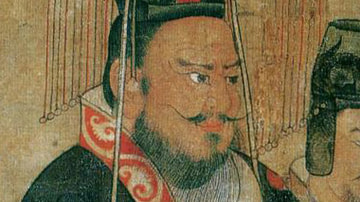
Chinese Emperor
The emperors of ancient China had tremendous power and responsibility. Called the 'Son of Heaven', he (and once she) was given a divine right to rule over all people but was expected to promote their best interest and not his...

Definition
Sejong the Great
King Sejong the Great (15 May 1397 to 8 April 1450 CE) ruled Korea from 1418 to 1450 CE as the fourth king of the Joseon Dynasty (also spelled Choson). One of only two Korean kings called 'the Great' today, Sejong had a major...

Definition
Xanadu - Kublai Khan's Fabled Capital
Xanadu (aka Shangdu, Shang-tu, and Kaiping) located in Inner Mongolia, northern China, was first the capital (1263-73) and then the summer capital (1274-1364) of the Mongol Empire. It came to prominence during...

Definition
Tokugawa Iemitsu
Tokugawa Iemitsu (1604-1651) governed Japan as the third shogun of the Edo period. He implemented a number of important policies that not only consolidated his family's hold on power but also greatly impacted Japanese society...

Definition
Script - The Written Record of Humanity
Script is the written expression of a language. Cuneiform, the first script, was invented in Sumer, Mesopotamia, circa 3600/3500 BCE; hieroglyphics sometime prior to the Early Dynastic Period in Egypt (circa...
