
Search
Remove Ads
Advertisement
Search Results

Definition
Marco Polo
Marco Polo (1254-1324 CE) was a Venetian merchant and explorer who travelled to China and served the Mongol ruler Kublai Khan (l. 1214-1294 CE) between c. 1275 and 1292 CE. Polo's adventures are recounted in his own writings, The...

Definition
Ögedei Khan
Ogedei Khan (aka Ogodei) ruled the Mongol Empire from 1229 to 1241. He was the third son of Genghis Khan (r. 1206-1227), the empire's founder. Ogedei's accomplishments included creating a new capital at Karakorum, establishing a system...

Definition
Zorvanism
Zorvanism (also given as Zuvanism, Zurvanism) was a sect of the Persian religion Zoroastrianism which emerged in the late Achaemenid Empire (c. 550-330 BCE) and flourished during the Sassanian Empire (224-651 CE). It is often referenced...

Definition
Zeno of Citium
Zeno of Citium (l. c. 336-265 BCE) was the founder of the Stoic school of philosophy in Athens, which taught that the Logos (Universal Reason) was the greatest good in life and living in accordance with reason was the purpose of...

Definition
Hyangga
Hyangga was a form poetical 'country song,' distinct from contemporary Chinese songs, which were written in the Silla and Goryeo kingdoms of ancient Korea between the 7th and 10th century CE. The indigenous songs cover such topics as...
Definition
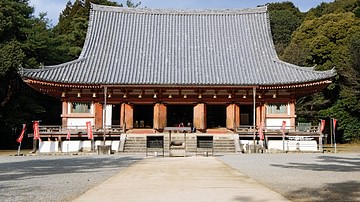
Daigoji
Daigoji is a Shingon Buddhist temple complex in Kyoto (ancient Heiankyo), Japan, which was founded in 874 CE by the scholar monk Shobo (aka Rigen Daishi). The site established close ties with the imperial family and became an important...
Definition
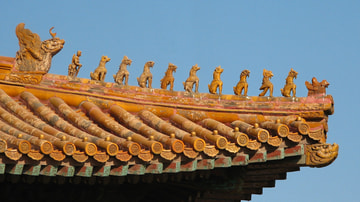
Ancient Chinese Architecture
Walled compounds, raised pavilions, wooden columns and panelling, yellow glazed roof tiles, landscaped gardens, and a careful application of town planning and use of space are all notable features of the architecture...
Definition
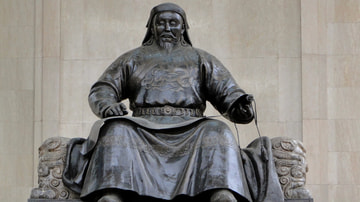
Kublai Khan
Kublai Khan (Qubilai-Qan) was the ruler of the Mongol Empire from 1260 to 1294. His accomplishments include establishing Mongol rule in China under the name of the Yuan Dynasty (1271-1368), thus becoming the first non-Chinese to rule...

Definition
Karakorum - Capital of the Mongol Empire
Karakorum (aka Qaraqorum, modern name: Harhorin) is located in the Orkhon Valley of central Mongolia and was the capital of the Mongol Empire from 1235 to 1263. Ogedei Khan (r. 1229-1241) ordered its construction...

Definition
Yazdegerd III
Yazdegerd III (r. 632-651) was the last monarch of the Sassanian Empire (224-651), ruling – or attempting to rule – amidst the chaos of its final decline and fall to the invading Muslim Arabs. He was the son of the prince Shahriyar...
