
Search
Remove Ads
Advertisement
Search Results

Article
Ancient Greek Inventions
The ancient Greeks are often credited with building the foundations upon which all western cultures are built, and this impressive accolade stems from their innovative contributions to a wide range of human activities...

Definition
Stupa
A stupa (literally “heap” or “pile”) is a reliquary, a shrine containing the remains of a holy or sainted person and/or artifacts (relics) associated with them, originating in India prior to the 5th century BCE as tombs of holy men and...

Definition
Chitrali Mythology
Chitrali mythology developed in the region of Chitral, the tallest portions of the Hindu Kush mountains, where the Chitrali people, at the juncture of South, Central, West, and East Asia, were exposed to many external cultural...

Definition
Chidambaram
Chidambaram (Cidambaram) is an important Chola temple site in Tamil Nadu, southern India. Most of the temples at Chidambaram were built in the 12th and 13th centuries CE. The site is dominated by the huge gateway tower of the Nataraja...

Article
Mandu - City of Joy
The city of Mandu is situated about 35 km from Dhar in the Madhya Pradesh region of northern-central India. Most of the city's monuments date to the 15th and 16th century CE. The city is located on a hill which rises 633 m...

Definition
Thomas Aquinas
Saint Thomas Aquinas (l. 1225-1274, also known as the "Ox of Sicily" and the "Angelic Doctor") was a Dominican friar, mystic, theologian, and philosopher, all at once. Although he lived a relatively short life, dying at age 49...

Definition
Buddhism
Buddhism is a non-theistic religion (no belief in a creator god), also considered a philosophy and a moral discipline, originating in the region of modern-day India in the 6th and 5th centuries BCE. It was founded by the sage Siddhartha...
Definition
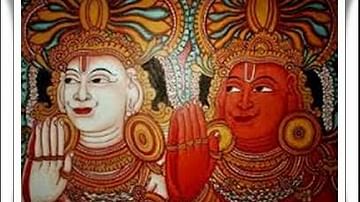
Ashvins
The Ashvins (aka Asvins, Asvinau, or Asvini Kumaras) are two twin brothers of Hindu mythology, sons of the sun god Surya. They may also be referred to as the 'Horsemen' and are forever young, handsome, and athletic. They are considered...

Definition
Ganesha
Ganesha (also Ganesa or Ganapati) is one of the most important gods in Hinduism. Ganesha is easily recognized with his elephant head and human body, representing the soul (atman) and the physical (maya). Ganesha is the patron of writers...

Definition
Katas Raj
The Katas Raj Temples near Chakwal in Punjab province of Pakistan are attributed to the eras of the Hindu Shahis (kings) dating from about 615-950 CE and are dedicated to Lord Shiva. As such they constitute one of the most important...
