
Search
Remove Ads
Advertisement
Search Results
Definition
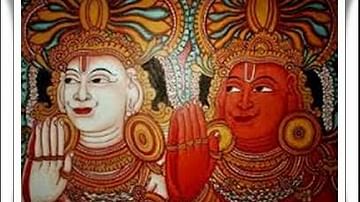
Ashvins
The Ashvins (aka Asvins, Asvinau, or Asvini Kumaras) are two twin brothers of Hindu mythology, sons of the sun god Surya. They may also be referred to as the 'Horsemen' and are forever young, handsome, and athletic. They are considered...

Definition
Marcus Aurelius
Marcus Aurelius (r. 161 to 180 CE) was a Roman emperor best known as the last of the Five Good Emperors of Rome (following Nerva, Trajan, Hadrian, and Antoninus Pius) and as the author of the philosophical work Meditations. Although...

Article
Roman Students in Athens
Training in oratory was a crucial part of Roman education; it was associated with a young boy's transition into adult life. As Athens was considered the intellectual centre of the eastern Mediterranean, many students undertook...

Article
The Life of Crates of Thebes in Diogenes Laertius
Crates of Thebes (l. c. 360-280 BCE) was one of the most important Cynic philosophers of ancient Greece. He was born to a wealthy family in Thebes but gave away his inheritance after realizing the futility...

Definition
Gnosticism
Gnosticism is the belief that human beings contain a piece of God (the highest good or a divine spark) within themselves, which has fallen from the immaterial world into the bodies of humans. All physical matter is subject to decay...

Definition
John Locke
John Locke (1632-1704) was an English philosopher responsible for laying the foundation of the European Enlightenment. Locke believed that each branch of government should have separate powers, that liberty must be protected from...

Definition
The Enlightenment
The Enlightenment (Age of Reason) was a revolution in thought in Europe and North America from the late 17th century to the late 18th century. The Enlightenment involved new approaches in philosophy, science, and politics. Above...

Definition
Proclus
Proclus of Athens (c. 412-485 CE) was a prolific Platonic philosopher whose main aim was the seemingly impossible task of defending traditional Greek polytheism at the time when his contemporary culture was almost completely dominated...

Definition
Francis Bacon
Francis Bacon (1561-1626) was an English philosopher, statesman, and author. Bacon is often considered one of the founders of modern scientific research and scientific method, even as "the father of modern science" since he proposed...

Definition
Renaissance Humanism
Renaissance Humanism was an intellectual movement typified by a revived interest in the classical world and studies which focussed not on religion but on what it is to be human. Its origins went back to 14th-century Italy...
