
Search
Remove Ads
Advertisement
Search Results

Definition
Thanjavur
Thanjavur (Tanjavur or Tanjore) is a temple site in the Tamil Nadu region of southern India. Thanjavur was the capital of the great Chola (Cola) king Rajaraja I, and it was he who commissioned the site's magnificent temple, the Brihadishvara...
Definition
Bhubaneshwar
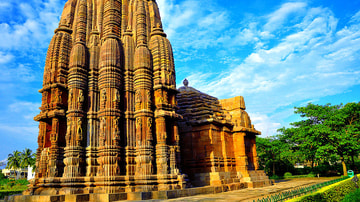
Bhubaneshwar (also spelt Bhubaneswar, Bhubanesar, and Bhuvanesvar) is a city located in the Orissa district of north-eastern India and flourished as a centre of Hindu worship from the 7th century CE. Its mass of well-preserved sandstone...

Article
The Life and Thought of Zeno of Citium in Diogenes Laertius
Zeno of Citium (c. 336 – 265 BCE) was the founder of the Stoic School of philosophy in Athens, which taught that the Logos (Universal Reason) was the greatest good in life and living in accordance...

Definition
Bhagavad Gita
The Bhagavad Gita (“Song of God” or “Song of the Lord”) is among the most important religious texts of Hinduism and easily the best known. It has been quoted by writers, poets, scientists, theologians, and philosophers – among others...

Definition
Jainism
Jainism is one of the oldest religions in the world. The name comes from jiva (soul or life force but, capitalized, is also given as Spiritual Conqueror) as it maintains that all living things possess an immortal soul which has always...

Article
Gorgias' On Nature (On the Non-Existent)
Gorgias of Leontini (l. c. 427 BCE) was a famous Greek Sophist who claimed that nothing exists and, even if it does, its nature cannot be understood and, even if it could be, one is not able to communicate...

Definition
Western Astrology
Western astrology refers to a form of divination based on the motion of astronomical objects such as stars or planets. The belief that astronomical objects are divine or influence events on Earth is found in many cultures, but...

Definition
Jean-Jacques Rousseau
Jean-Jacques Rousseau (1712-1778) was a Swiss philosopher whose work both praised and criticised the Enlightenment movement. Although a believer in the power of reason, science, and the arts, Rousseau was convinced that a...
Definition
Isocrates
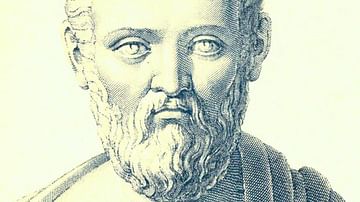
Isocrates (436-338 BCE) was an ancient Athenian rhetorician, characterized as one of the most prominent orators of his time, even though it appears that he restricted himself to writing speeches and not orating them himself. His most...

Definition
Jean-Paul Sartre
Jean-Paul Sartre (1905-1980) was a French existentialist philosopher who defined the existentialist movement in the 20th century. Considered the consummate intellectual, he was not only the author of philosophical works but also...
