
Search
Remove Ads
Advertisement
Search Results

Definition
Aristotle
Aristotle of Stagira (l. 384-322 BCE) was a Greek philosopher who pioneered systematic, scientific examination in literally every area of human knowledge and was known, in his time, as "the man who knew everything" and later simply...

Definition
Pythagoras
Pythagoras (l.c. 571 to c. 497 BCE) was a Greek philosopher whose teachings emphasized the immortality and transmigration of the soul (reincarnation), virtuous, humane behavior toward all living things, and the concept of "number"...

Definition
Zeno of Citium
Zeno of Citium (l. c. 336-265 BCE) was the founder of the Stoic school of philosophy in Athens, which taught that the Logos (Universal Reason) was the greatest good in life and living in accordance with reason was the purpose of...
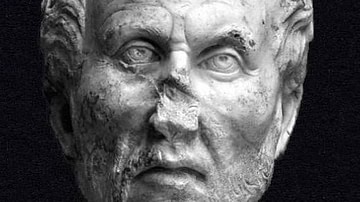
Definition
Plotinus
Plotinus (c. 204-270) was a Platonic philosopher born in Lycopolis, Egypt. Although the story of his life was written down by his student Porphyry, few biographical details are included because Plotinus rejected the physical world of...

Definition
Wonhyo
Wonhyo (l. 617-686 CE) was a Korean Buddhist philosopher whose works impacted a wide array of later philosophers and writers through his teaching that one’s interpretation of the world created one’s reality. He is highly regarded as the...

Definition
Pre-Socratic Philosophers
The Pre-Socratic Philosophers are defined as the Greek thinkers who developed independent and original schools of thought from the time of Thales of Miletus (l. c. 585 BCE) to that of Socrates of Athens (470/469-399 BCE...

Definition
Cyrenaics
The Cyrenaics were a philosophical school of thought founded c. 4th century BCE by Aristippus of Cyrene (l. c. 435-356 BCE) who taught that sensual pleasure was the highest good and only worthwhile pursuit in life. Known as the first...

Definition
Hinduism
Hinduism is the oldest religion in the world, originating in Central Asia and the Indus Valley, still practiced in the present day. The term Hinduism is what is known as an exonym (a name given by others to a people, place, or concept...

Video
Aquinas & the Cosmological Arguments: Crash Course Philosophy
Our unit on the philosophy of religion and the existence of god continues with Thomas Aquinas. Today, we consider his first four arguments: the cosmological arguments. — Images and video...

Definition
Portuguese Goa
Goa, located on the west coast of India, was a Portuguese colony from 1510 to 1961. The small coastal area was conquered by Afonso de Albuquerque (c. 1453-1515) and became an important trade hub for the Eastern spice trade. Goa...
