
Search
Remove Ads
Advertisement
Search Results

Article
Poor Man of Nippur
The Poor Man of Nippur (c. 701 BCE) is a Babylonian poem on the themes of the obligations of hospitality and revenge for an undeserved injury. A poor man of the city of Nippur feels mistreated when he visits the mayor and then goes to great...

Article
Egyptian Gods - The Complete List
The gods and goddesses of Ancient Egypt were an integral part of the people's everyday lives for over 3,000 years. There were over 2,000 deities in the Egyptian pantheon, many whose names are well known - Isis, Osiris, Horus, Amun, Ra, Hathor...
Definition
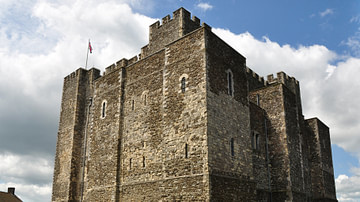
Dover Castle
Dover Castle, located in the southern county of Kent, is one of the largest castles in England and one of the first to have concentric defensive walls. First built in 1066 CE by William the Conqueror to help prevent anyone repeating his own...

Image
All Nations Gate at Persepolis
Western view of the "All Nations Gate" at Persepolis, located in present-day Iran. This gate was not on Darius the Great's initial plan for Persepolis but was added by his son and successor, Xerxes. The initial main entrance of the palace...

Image Gallery
A Gallery of Lions of Mesopotamia
The Asiatic lion in Mesopotamia symbolized the forces of chaos, which the king defeated in his role as a champion of order and civilization. Lions appear in works of art from the Early Dynastic Period through the time of the Neo-Assyrian...
Image
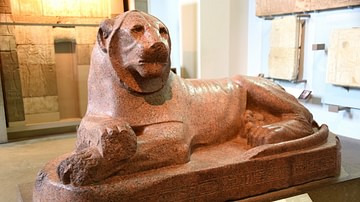
King Amenhotep III as a Lion
Statue of Amenhotep III, declares the king's might by representing him as a lion, from Napata (Gebel Barkal, Sudan), originally from Soleb (Sudan), 18th Dynasty, reign of Amenhotep III, 1390-1352 BCE. Pharaohs were often shown as a sphinx...

Article
Another Ariamanus Statue Found: The Evil Spirit of Mithraic Religion
It is rare when a new find creates renewed interest in an old subject. Here, the new find is a leontocephaline (lion-headed) figure of unknown provenance, weighing 5.8 kg and 37 cm in height with a width of 14 cm. Its base is partially broken...
Image
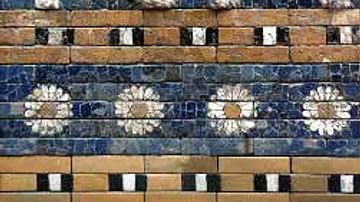
Detail of the Ishtar Gate
Detail of the Ishtar-Gate : a lion, symbol of the goddess Ishtar.

Image
The Toledo Gate in Ciudad Real
The Toledo Gate, photograph by Juan Ángel Piqueras, Ciudad Real, Castilla-La Mancha, Spain, 13 July 2026. The Toledo Gate (Spanish: La Puerta de Toledo) in Ciudad Real is a significant example of military architecture dating to the 13th–14th...

Image
Dragon of the Ishtar Gate
A Babylonian mušḫuššu dragon, glazed tiles from the Ishtar Gate, which was constructed by Nebuchadnezzar II, c. 575 BCE.
Istanbul Archaeological Museums.
