
Search
Remove Ads
Advertisement
Search Results
Image
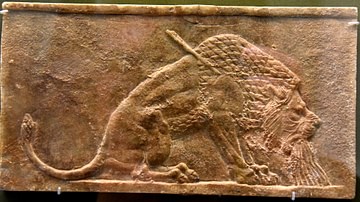
Assyrian Dying Lion
Detail of a much larger gypsum wall relief showing the climax of a royal lion hunt. The lion is shown in his final death throes, blood pouring from his mouth. From the North Palace of Ashurbanipal II at Nineveh, Mesopotamia...

Image
Lion tombs at Dadan
Lion Tombs at Dadan, photograph by the Royal Commission of AlUla, Saudi Arabia. The carved lions are thought to symbolise powerful status or strength, or they could have been carved to protect the tomb’s occupants. Some of...

Image
Lion-hunting Scene from Sakçagözü
This basalt wall relief depicts a lion-hunting scene. The soldier in front of the lion as well as the horse wear a body armor. The archer standing on the chariot is probably the ruler and is protected by the winged...
Image
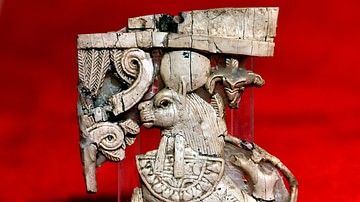
Ivory Panel Showing a Lion Facing a Tree
Fragmentary openwork, tenoned panel depicting a lion seated to the left and facing the stylized tree. The lion is crowned with the sun disc and displays pointed dog-like ears. It wears a lappet wig and usekh...
Image
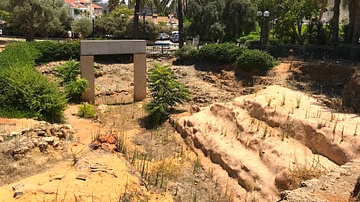
Ruins of the Lion Temple in Jaffa
The Lion Temple, located in present-day Jaffa, Israel, got its name from a lioness' skull that was found within it. This skull was apparently used in a ritual performed here at the time of the ancient Canaanites...

Image
Lion Statue from Eridu
One of a pair of lions which once stood at the gate of the ancient Sumerian city of Eridu (Tell Abu Shahrain) to guard the city's entrance. The lion was carved from black basalt. From Eridu, Southern Mesopotamia, in modern-day...
Image
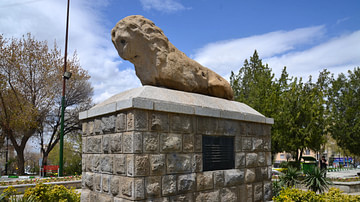
Stone Lion of Hamadan, Iran
The Stone Lion of Hamadan, which once had a twin, was part of the old gate of the city of Ecbatana in Persia (modern-day Iran). According to some accounts, the lions were built upon the order of Alexander the Great (r...
Image
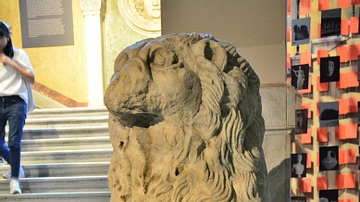
Lion Statue from the Bucaleon Palace
Lion statue from the Monumental Gate of Bucaleon Palace. Culture: Byzantine, Period: Early Byzantine, Findspot: Catladikapi, Istanbul, Materials: Marble. (Istanbul Archaeological Museum)

Image
Great Gate of Ishtar
This is a reconstruction of the Great Gate of Ishtar that stood at the entrance to the ancient city of Babylon. The Babylonian King Nebuchadnezzar II (r. 605/604-562 BCE) ordered the gate to be constructed in c. 575 BCE and...
Image
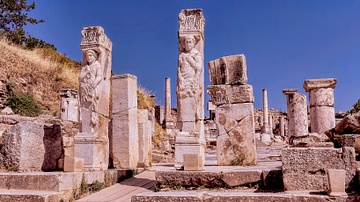
Hercules Gate, Ephesus
The Hercules Gate at Ephesus gets its name from the reliefs of Hercules that adorn its columns. Hercules is considered the greatest of Greek heroes, and the epitome of masculinity. In the reliefs, Hercules is depicted wearing...
