
Search
Remove Ads
Advertisement
Search Results

Definition
Wars of the Diadochi
On June 10, 323 BCE Alexander the Great died in Babylon. Although historians have debated the exact cause most agree that the empire he built was left without adequate leadership for there was no clear successor or heir. The...

Definition
Third Crusade
The Third Crusade (1189-1192 CE) was launched to retake Jerusalem after its fall to the Muslim leader Saladin in 1187 CE. The Crusade was led by three European monarchs, hence its other name of 'the Kings' Crusade'. The three leaders...

Definition
Caernarfon Castle
Caernarfon Castle (aka Caernarvon) is located in North Wales and was first built from 1283 CE by Edward I of England (r. 1272-1307 CE) to help, along with several other major castles, control the newly conquered area. As the...

Definition
Geronimo
Geronimo (Goyahkla, l. c. 1829-1909) was a medicine man and war chief of the Bedonkohe tribe of the Chiricahua Apache nation, best known for his resistance against the encroachment of Mexican and Euro-American settlers and armed forces...

Definition
Battle of Fort Henry - The First Ironclad Engagement on a Fortification
The Battle of Fort Henry (6 February 1862) is often referenced as the first major Union victory in the Western theater of the American Civil War, but it was not. The first major Union...
Definition
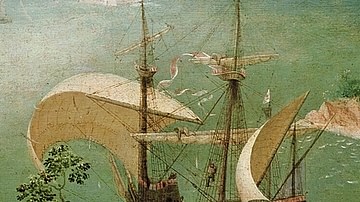
Carrack
The carrack (nao in Spanish, nau in Portuguese, and nef in French) was a type of large sailing vessel used for exploration, to carry cargo, and as a warship in the 15th and 16th centuries. Famous carracks include the Santa Maria of Christopher...

Definition
J. E. B. Stuart - The Cavalier of the Confederacy
James Ewell Brown Stuart (1833-1864), better known by his initials as J. E. B. Stuart, was a Confederate cavalry general during the American Civil War (1861-1865). Known for his flashy style of dressing...

Definition
Aeschylus
Aeschylus (c. 525 - c. 456 BCE) was one of the great writers of Greek Tragedy in 5th century BCE Classical Athens. Known as 'the father of tragedy', the playwright wrote up to 90 plays, winning with half of them at the great Athenian...

Definition
Buddhism
Buddhism is a non-theistic religion (no belief in a creator god), also considered a philosophy and a moral discipline, originating in the region of modern-day India in the 6th and 5th centuries BCE. It was founded by the sage Siddhartha...
Definition
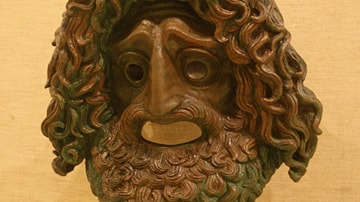
Ancient Greek Tragedy
Greek tragedy was a popular and influential form of drama performed in theatres across ancient Greece from the late 6th century BCE. The most famous playwrights of the genre were Aeschylus, Sophocles, and Euripides and many...
