
Search
Did you mean: Marduk?
Remove Ads
Advertisement

 This answer was generated by
Search Results

Image
Marble Door at Hagia Sophia
White marble door of the Hagia Sophia, photograph by Juan Ángel Piqueras, Istanbul, 25 February, 2026. The Marble Door (also known as “Gate of Heaven and Hell”) in Hagia Sophia’s south upper gallery marks the threshold...

Image
Marble Head of Titus Flavius Orestes
Marble head of Titus Flavius Orestes, from Herakleia Lynkestis, near Bitola, North Macedonia, c. 1st-2nd century CE. Archaeological Museum of Heraclea, Bitola. The marble head was located in the colonnaded courthouse...
Image
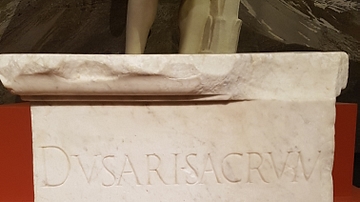
Marble Altar Sacred to Dushares Puteoli
Marble altar sacred to Dushares Puteoli. 1st century CE. Museo dei Campo Flegrei, (National Maritime Museum, Sydney Australia). A beautiful piece of Italian Carrrara marble fashioned into an altar to Dushares...

Image
Marble Statue of Bes
A marble statue of Bes, the Egyptian god of childbirth, fertility, sexuality, humour, and war. 1st-2nd century CE. (Vatican Museums, Rome)

Image
Marble Funerary Relief, Tarentum
A marble relief from a funerary monument depicting seated women. 4th century BCE, Tarentum. (Archaeological Museum of Taranto, Italy)

Image
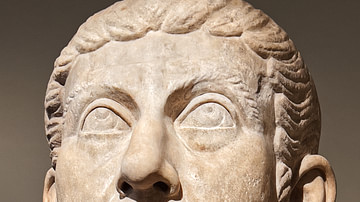
Marble Figurine of Leda Avoiding the Swan
Attic table support, depicting Leda avoiding the swan, c. before 250 CE. Archaeological Museum of Thessaloniki, Greece. Founded c. 316 BCE and located at the heart of the Thermaic Gulf in the Aegean, the...
Image
Marble Head of Emperor Constantine I
Marble head of Emperor Constantine I (r. 306-337 CE) by an unknown artist, c. 325-370 CE.
Metropolitan Museum of Art, New York.

Image
Marble Satyr Torso
A marble torso of a satyr (or centaur), from Asia Minor, 2nd century CE. (Palazzo Altemps, Rome)

Image
Marble Bust of a Roman Woman
The woman may be a member of the imperial family. She is known from other portraits, but can not be individually identified. Roman, circa 160-170 CE. From the Pourtalès Collection. (The British Museum, London).
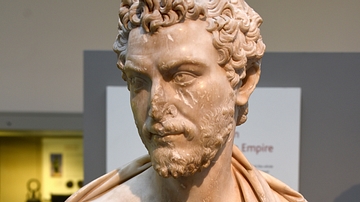
Image
Marble Bust of a Young Greek Male
The man is dressed like Greeks of the Classical Period. His chest is bare and he has a heavy mantle draped over his shoulders This does not reflect the real fashion of his time, but is meant to lend him an air of...
