
Search
Remove Ads
Advertisement
Search Results

Article
The Daily Life of Medieval Nuns
Monasteries were an ever-present feature of the Medieval landscape and perhaps more than half were devoted solely to women. The rules and lifestyle within a nunnery were very similar to those in a male monastery. Nuns...

Article
Slavery in Colonial America
Slavery in Colonial America, defined as white English settlers enslaving Africans, began in 1640 in the Jamestown Colony of Virginia but had already been embraced as policy prior to that date with the enslavement and...

Article
Top 10 Inventions of the Industrial Revolution
The British Industrial Revolution transformed life at work and at home for practically everyone. Noise, pollution, social upheaval, and repetitive jobs were the price to pay for labour-saving machines...

Article
Trade in the Roman World
Regional, inter-regional and international trade was a common feature of the Roman world. A mix of state control and a free market approach ensured goods produced in one location could be exported far and wide. Cereals...

Article
Maya Food & Agriculture
For the Maya, reliable food production was so important to their well-being that they closely linked the agricultural cycle to astronomy and religion. Important rituals and ceremonies were held in honour of specialised workers...
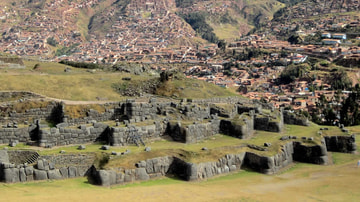
Image
Sacsayhuaman Fortifications
The Inca Sacsayhuaman (also Saqsawaman) fortress-temple complex of northern Cuzco, 13th-15th century CE.

Book Review
The Fabric of Civilization: How Textiles Made the World
In The Fabric of Civilization: How Textiles Made the World, Virginia Postrel expertly demonstrates how the history of textiles is the story of human progress. Although textiles have shaped society...

Image
Machu Picchu Aerial View
The Inca site of Machu Picchu built by Pachacuti Inca Yupanqui (1438-71 CE). Fortress, sanctuary, and once home to around 1,000 residents, the site is perched in the high Andes above the river Urubamba.

Collection
Food in the Ancient World
Meals in the ancient Mediterranean revolved around the common staples of cereals, vegetables, fruit, and olive oil, with an occasional bit of fish and meat thrown in for those who could afford it. The Phoenicians and Greeks...

Image
Map of Spanish Conquest & Exploration in North America
This map illustrates the expansion of Spanish imperial power following the completion of the Reconquista in 1492 and the voyages of Christopher Columbus (first voyage 1492). Fueled by promises of...
