
Search
Remove Ads
Advertisement
Search Results

Image
La Doncella
La Doncella, "The maiden", one of the three mummies of Inca children sacrificed c. 1500 and found in 1999 near the top of the Llullaillaco volcano, on the Argentina–Chile border. Museum of High Altitude Archaeology, Salta, Argentina...

Book Review
The Incas (Peoples of America)
Terence D'Altroy is impressively described on the back cover of this book as 'Professor in Anthropology at Columbia University, Director of the Columbia Centre for Archaeology, and the world's leading Inca specialist.'...

Image
Torreon, Machu Picchu
The Torreon (or Observatory) at Machu Picchu, Peru, c. 1450 CE. The tower is a rare example of curved Inca architecture. The tower, as is typical of Inca architecture, incorporates natural features into its design. Below the...
Image
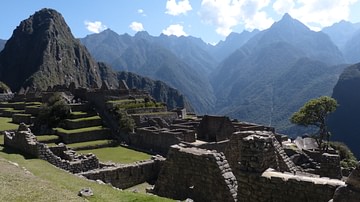
Machu Picchu, Peru
The Inca site of Machu Picchu built by Pachacuti Inca Yupanqui (1438-71 CE). Fortress, sanctuary, and once home to around 1,000 residents, the site is perched in the high Andes above the river Urubamba.

Image
Wari Tunic
A Wari tunic, Peru, 750-900 CE. The geometrical designs with idosyncratic arrangement is typical of Wari textiles. (George Washington University Museum, The Textile Museum, Washington D.C.)

Image
Trade in the Roman Empire Map (c. 200 CE)
This map shows the major sources of trade goods in the Roman Empire, circa 200 CE. The map shows the sources of the following trade goods: grain, olive oil, slaves, wine, metals, textiles and wild animals.
Image
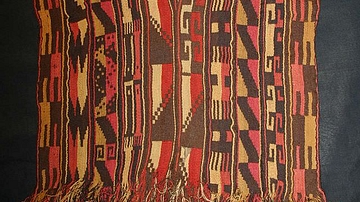
Nazca Poncho
A Nazca poncho (200 BCE-500 CE) which illustrates the vibrant colours and bold linear patterns typical of Nazca textiles. (Lombards Museum)
Image
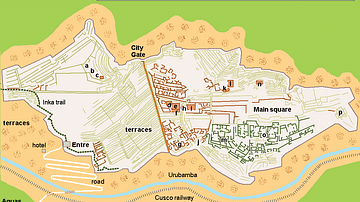
Map of Machu Picchu
A map of Machu Picchu, the Inca site in the high Andes in the Urubamba Valley. The settlement was founded by Pachacuti Inca Yupanqui in c. 1450 CE. Typical of Inca architecture, the settlement follows the contours of the natural...

Video
Francisco Pizarro: Spanish Conquistador - Fast Facts | History
Spanish conquistador and eventual Governor of Peru Francisco Pizarro acquired wealth through kidnapping, ransom, and murder. Find out more about his violent rise to power in this video...

Image
Traditional Reed Raft, Lake Titicaca
A traditional totora reed raft on Lake Titicaca. For several pre-Columbian cultures, including the Incas, the lake was considered the centre of the cosmos and place of creation.
