
Search
Remove Ads
Advertisement
Search Results

Image
Yazilikaya Hittite Rock Sanctuary
Yazılıkaya is a Hittite rock sanctuary located about 1.5 kilometres northeast of Hattusa, the capital city of the Hittite Empire in the late Bronze Age. It is the largest known Hittite rock monument. The sanctuary...
Image
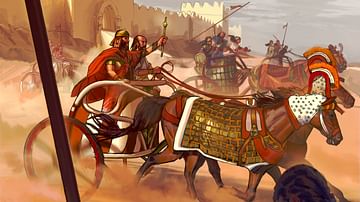
Hittite War Chariots
Artist's impression of ancient Hittite war chariots leaving a Hittite city for battle. The Hittites were present in Anatolia from around 1700 to 1200 BCE. Created by Amplitude Studios for the video game Humankind.

Image
Treaty Establishing Hittite Domination over Aleppo
This clay tablet is known as the "Aleppo Treaty". The treaty was drawn up between the Hittite king Mursili II and Talmi-sharruma (king of Aleppo). It was written in Akkadian, the diplomatic language...

Image
Hittite Basalt Stela Showing Goddess Kubaba
The upper part is a freestanding basalt monument depicting the goddess Kubaba, consort of the storm god Teshub, and one of the most important deities at Carchemish. She holds a mirror and pomegranate, symbols...
Image
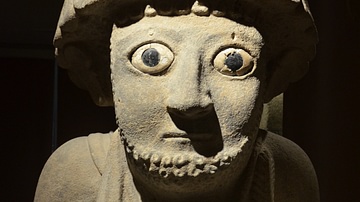
Neo-Hittite King Suppiluliuma
Neo-Hittite statue of King Suppiluliuma unearthed in 2012 at Kunulua, the capital of the Neo-Hittite Kingdom of Patina (1000-738 BCE) in southeastern Turkey. The remains of the figure stand approximately 1.5 meters...
Image
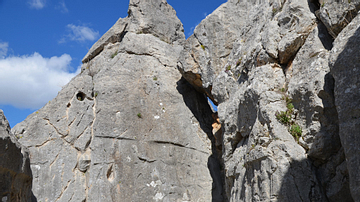
Hittite Rock Reliefs at Yazilikaya
Hittite rock reliefs in Chamber A of the Yazilikaya Hittite Sanctuary (13th century BCE). On the left wall, the relief depicts the meeting between Teshub, the Hurrian god of sky and storm, and Hepat, the mother...

Image
Yazilikaya Hittite Rock Sanctuary, Overview of Chamber A
The Yazilikaya Hittite sanctuary was made of two rock chambers, later labelled Chamber A and Chamber B by archaeologists. The walls of each chamber were covered with the richest and most striking...
Image
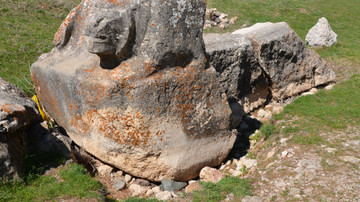
Hittite Lion Tub at Hattusa
A Hittite Lion Tub lying among the ruins of the Great Temple at Hattusa, the capital of the Hittite Empire. The basin was originally 5.5 metres long, and featured crouching lions at all four corners. It probably had a...
Image
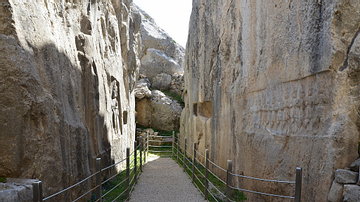
Yazilikaya Hittite Rock Sanctuary, Overview of Chamber B
The Yazilikaya Hittite sanctuary near Hattusa was made of two rock chambers, later labelled Chamber A and Chamber B by archaeologists. The walls of each chamber were covered with the richest and...
Image
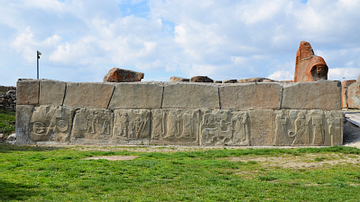
Hittite Orthostates at Alacahöyük
Copies of Hittite orthostates at Alacahöyük (the site of a Neolithic and Hittite settlement in central Turkey) which decorated the external facade of the Sphinx Gate, the south entrance to the city. They depict a...
