
Search
Remove Ads
Advertisement
Search Results

Definition
Parthian Warfare
Parthian warfare was characterized by the extensive use of cavalry and archers. Coming at enemy troops from all directions Parthian riders created confusion and wreaked havoc. They even developed the famous “Parthian shot.” Able...
Definition
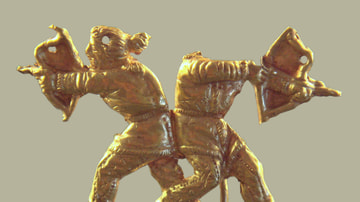
Scythian Warfare
Scythian warfare used state-of-the-art recurve bows and hit-and-run tactics against set infantry formations. Working from nimble horses, Scythian warriors could unleash a cloud of lethal arrows. Known, too, for their innovative...

Article
Elephants in Greek & Roman Warfare
In the search for ever more impressive and lethal weapons to shock the enemy and bring total victory the armies of ancient Greece, Carthage, and even sometimes Rome turned to the elephant. Huge, exotic, and frightening...

Definition
Ancient Persian Warfare
The ancient Persian military evolved from the earlier armed forces of the Medes which, in turn, developed from the warrior class of the indigenous people of the Iranian Plateau, the Aryan migrants (including the Persians...

Article
Chariots in Ancient Indian Warfare
The chariot was the elite arm of ancient Indian armies in the Vedic (1500 BCE – 1000 BCE) and Epic periods (described by the Ramayana and the Mahabharata, 1000-600 BCE) because of the advantages it conferred and...
Interview
Author Interview: Son of Ishtar by Gordon Doherty
Today we sit down with Gordon Doherty to discuss his new book Empires of Bronze: Son of Ishtar. Based in the dark and cold north (i.e. Scotland), Gordon has written extensively on ancient Greece and...

Article
Siege Warfare in Medieval Europe
Siege tactics were a crucial part of medieval warfare, especially from the 11th century CE when castles became more widespread in Europe and sieges outnumbered pitched battles. Castles and fortified cities offered...

Article
Fortifications in Ancient Chinese Warfare
While ancient Chinese warfare was often characterised by large armies in pitched battles, siege warfare and the sacking of cities were also regular features. Huge earth walls with towers and encircling ditches...

Definition
Ramesses II
Ramesses II (r. 1279-1213 BCE, alternative spellings: Ramses, Rameses) was known to the Egyptians as Userma'atre'setepenre, which means 'Keeper of Harmony and Balance, Strong in Right, Elect of Ra'. He is also known also as Ozymandias...

Article
The Battle of Kadesh & the First Peace Treaty
Ramesses II (The Great, 1279-1213 BCE) ruled Egypt for 67 years and, today, the Egyptian landscape still bears testimony to the prosperity of his reign in the many temples and monuments he had built in...
