
Search
Remove Ads
Advertisement
Search Results
Image
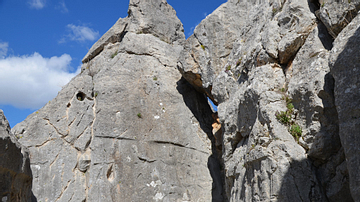
Hittite Rock Reliefs at Yazilikaya
Hittite rock reliefs in Chamber A of the Yazilikaya Hittite Sanctuary (13th century BCE). On the left wall, the relief depicts the meeting between Teshub, the Hurrian god of sky and storm, and Hepat, the mother...
Image
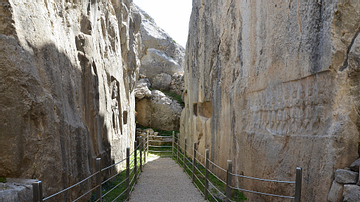
Yazilikaya Hittite Rock Sanctuary, Overview of Chamber B
The Yazilikaya Hittite sanctuary near Hattusa was made of two rock chambers, later labelled Chamber A and Chamber B by archaeologists. The walls of each chamber were covered with the richest and...
Image
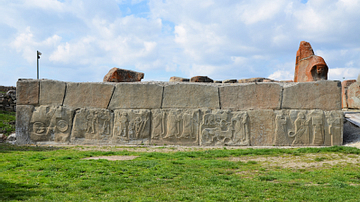
Hittite Orthostates at Alacahöyük
Copies of Hittite orthostates at Alacahöyük (the site of a Neolithic and Hittite settlement in central Turkey) which decorated the external facade of the Sphinx Gate, the south entrance to the city. They depict a...

Image
Hittite Lion Tub at Hattusa
A Hittite Lion Tub lying among the ruins of the Great Temple at Hattusa, the capital of the Hittite Empire. The basin was originally 5.5 metres long, and featured crouching lions at all four corners. It probably had a...

Image
Neo-Hittite King Suppiluliuma
Neo-Hittite statue of King Suppiluliuma unearthed in 2012 at Kunulua, the capital of the Neo-Hittite Kingdom of Patina (1000-738 BCE) in southeastern Turkey. The remains of the figure stand approximately 1.5 meters...

Image
Yazilikaya Hittite Rock Sanctuary, Overview of Chamber A
The Yazilikaya Hittite sanctuary was made of two rock chambers, later labelled Chamber A and Chamber B by archaeologists. The walls of each chamber were covered with the richest and most striking...
Interview
Author Interview: Son of Ishtar by Gordon Doherty
Today we sit down with Gordon Doherty to discuss his new book Empires of Bronze: Son of Ishtar. Based in the dark and cold north (i.e. Scotland), Gordon has written extensively on ancient Greece and...

Article
Siege Warfare in Medieval Europe
Siege tactics were a crucial part of medieval warfare, especially from the 11th century CE when castles became more widespread in Europe and sieges outnumbered pitched battles. Castles and fortified cities offered...

Article
Fortifications in Ancient Chinese Warfare
While ancient Chinese warfare was often characterised by large armies in pitched battles, siege warfare and the sacking of cities were also regular features. Huge earth walls with towers and encircling ditches...

Article
The Battle of Kadesh & the First Peace Treaty
Ramesses II (The Great, 1279-1213 BCE) ruled Egypt for 67 years and, today, the Egyptian landscape still bears testimony to the prosperity of his reign in the many temples and monuments he had built in...
