
Search
Search Results

Definition
Kingdom of Israel
The Kingdom of Israel occupied that part of the land on the Mediterranean Sea known as the Levant which corresponds roughly to the State of Israel of modern times. The region was known, historically, as part of Canaan, as Phoenicia, as Palestine...

Definition
Solomon
According to biblical tradition (and some say myth), King Solomon was the third and last king in the ancient United Kingdom of Israel. Other faiths, such as Islam and Rastafarianism, also embrace the notion of Solomon as a sagacious king...

Definition
Hayasa-Azzi
The Hayasa-Azzi were an indigenous Bronze Age tribal confederation which flourished on the plateau of ancient Armenia and eastern Anatolia between c. 1500 and c. 1200 BCE. Although the historical record is impoverished and disputed regarding...

Definition
Erebuni
Erebuni was an Urartian fortress and city, located between the Nor Aresh District and the Vardahsen District on the outskirts of present-day Yerevan, Armenia, and situated on top of Arin Berd hill. In Armenian, the fortress and archaeological...
Image
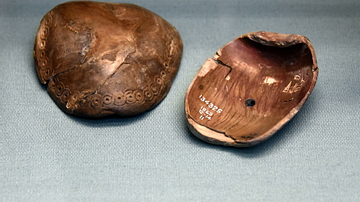
Shell Clappers with Luwian Hieroglyphs
These musical instruments were given to the Assyrian king Shalmaneser III (reigned 858-824 BCE) by the king of Hamath (now Hama) in Syria. His name, Urhilina, appears in Luwian hieroglyphs on the underside of the right shell. The border was...

Article
The Banquet Stele of Ashurnasirpal II
When he came to the throne in 884 BCE, Ashurnasirpal II had to attend to revolts which broke out across the empire. He ruthlessly put down all rebellions, destroyed the rebel cities and, as a warning to others, impaled, burned, and flayed...

Article
The Nimrud Dogs
The Nimrud Dogs, five canine figurines found at the ancient Mesopotamian city of Nimrud, were only a few of the many startling finds in the region during the 19th century when expeditions were sent to corroborate biblical narratives through...

Video
A Short History of Assyria and the Neo-Assyrian Empire
Assyria has a long history, beginning in northern Mesopotamia and then expanding during the Neo-Assyrian Empire from Mesopotamia through Asia Minor, and down through Egypt. The empire began in the city of Ashur and went through many different...

Image Gallery
A Gallery of Neo-Assyrian Kings
The Neo-Assyrian kings are among the best-known of the Assyrian Empire and include Tiglath Pileser III, Shalmaneser III, Sargon II, Sennacherib, Esarhaddon, and Ashurbanipal. The term Neo-Assyrian is a modern-day designation; the Assyrians...
Image
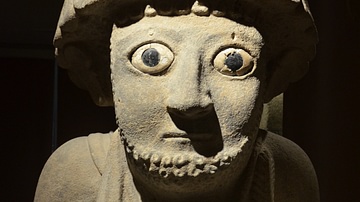
Neo-Hittite King Suppiluliuma
Neo-Hittite statue of King Suppiluliuma unearthed in 2012 at Kunulua, the capital of the Neo-Hittite Kingdom of Patina (1000-738 BCE) in southeastern Turkey. The remains of the figure stand approximately 1.5 meters in height, suggesting a...
