
Search
Remove Ads
Advertisement
Search Results

Image
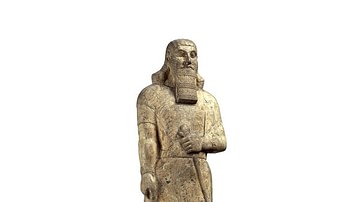
Shalmaneser III
Detail from a statue of Shalmaneser III (859 BC – 824 BC) at Istanbul Archaeology Museums.
Image
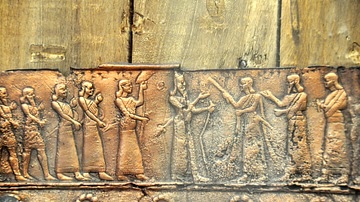
Shalmaneser III, Balawat Gate
Detail of the bronze casing of the Balawat gate. From Balawat (Imgur-Enlil), northern Mesopotamia, Iraq. Neo-Assyrian Period, reign of King Shalmaneser III, 858-824 BCE. (Ancient Orient Museum/Istanbul Archaeological Museums, Istanbul, Turkey...
Image
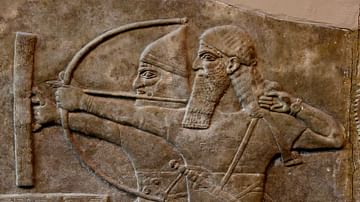
Crown Prince Shalmaneser III Attacks a City
Alabaster bas-relief depicting Shalmaneser III, Ashurnasirpal II’s son, attacking a city. Neo-Assyrian Period, 865-860 BCE. Detail of Panel 4 (bottom), Room B, the North-Palace Palace, Nimrud, modern-day Iraq. (The British Museum, London)
Image
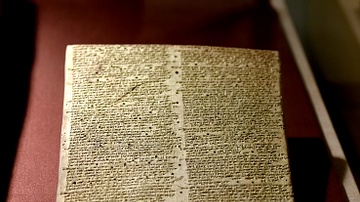
Clay Tablet of Shalmaneser III from Ashur
This clay tablet narrates the building works of the Assyrian king Shalmaneser III (reigned 858-824 BCE). From Ashur (Assur), Iraq. (The Iraq Museum, Baghdad).
Image
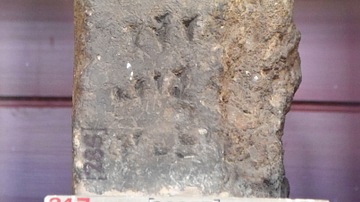
Brick Inscribed with the Name of Shalmaneser III
This cuneiform inscription on this fragment of a large brick mentions the name of the Neo-Assyrian king Shalmaneser III, reigned 858-824 BCE, and the construction of a temple at the city of Nimrud (ancient Kalhu; Biblical Calah). From Nimrud...
Image
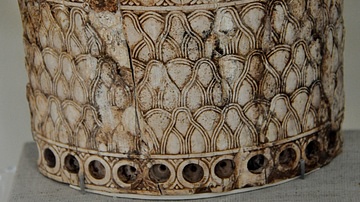
Fragment of an Ivory Cylinder from Fort Shalmaneser
This is a fragment of an ivory cylinder. The original decorative insets are lost. Neo-Assyrian Period, 8th century BCE. From Fort Shalmaneser at Nimrud, Mesopotamia, modern-day Iraq. A loan from the Metropolitan Museum of Art, New York, USA...
Definition
Ashurnasirpal II
Ashurnasirpal II (r. 884-859 BCE) was the third king of the Neo-Assyrian Empire. His father was Tukulti-Ninurta II (r. 891-884 BCE) whose military campaigns throughout the region provided his son with a sizeable empire and the resources to...

Definition
Sargonid Dynasty
The Sargonid Dynasty was the last ruling house of the Neo-Assyrian Empire from 722-612 BCE, beginning with the reign of Sargon II and ending with fall of the Neo-Assyrian Empire. Some of the most famous kings in the history of Assyria come...

Video
The Mask of Warka, Warka Vase, and Shalmaneser III's Throne Dais
A short video shot by Osama Shukir Muhammed Amin at the Iraq Museum in Baghdad on March 14, 2019. The video showcases the Mask of Warka, the Warka Vase, and the throne-dais of the Assyrian king Shalmaneser III.

Definition
Neo-Assyrian Empire
The Neo-Assyrian Empire (912-612 BCE) was the final stage of the Assyrian Empire, stretching throughout Mesopotamia, the Levant, Egypt, Anatolia, and into parts of Persia and Arabia. Beginning with the reign of Adad Nirari II (912-891 BCE...
