
Search
Search Results
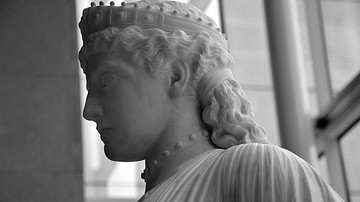
Definition
Semiramis
Semiramis is a legendary queen thought to based on the historical Sammu-Ramat (r. 811-806 BCE) the queen regent of the Assyrian Empire who held the throne for her young son Adad Nirari III until he reached maturity. She is also known as Shammuramat...

Definition
Mitanni
The Kingdom of Mitanni, known to the people of the land, and the Assyrians, as Hanigalbat and to the Egyptians as Naharin and Metani, once stretched from present-day northern Iraq, down through Syria and into Turkey and was among the greatest...
Article
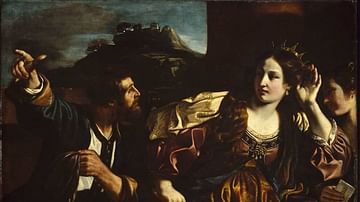
Sammu-Ramat and Semiramis: The Inspiration and the Myth
Sammu-Ramat (r. 811-806 BCE) was the queen regent of the Assyrian Empire who held the throne for her young son Adad Nirari III (r. 811-783 BCE) until he reached maturity. She is also known as Shammuramat, Sammuramat, and, most notably, as...

Article
History of Assyria
The foundation of the Assyrian dynasty can be traced to Zulilu, who is said to have lived after Bel-kap-kapu (c. 1900 BCE), the ancestor of Shalmaneser I. The city-state of Ashur rose to prominence in northern Mesopotamia, founding trade...

Definition
Medes
The Medes or Medians were a group of Indo-Iranian-speaking people from central Asia who migrated westwards and entered northern Iran around the end of the 2nd millennium BCE. They settled in the highlands of Zagros (Zagreus in Greek) and...

Definition
Dur-Sharrukin
Dur-Sharrukin (modern Khorsabad, Iraq) was a city built by Sargon II of Assyria (r. 722-705 BCE) as his new capital between 717-706 BCE. The name means Fortress of Sargon and the building project became the king's near obsession as soon as...
Image
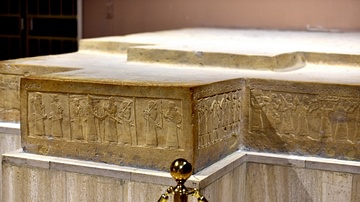
Throne Dais of Shlamaneser III at the Iraq Museum
This dais was found in the eastern end of the throne room (T1) at Fort Shalmaneser in the city of Nimrud (in modern-day Nineveh Governorate, Iraq) in 1962 CE. The upper surface is decorated with geometrical floral motifs and inscribed with...

Article
The Greatest Party Ever Thrown: Ashurnasirpal II’s Kalhu Festival
The greatest party ever thrown in antiquity is the inaugral event thrown by Ashurnasirpal II (r. 884-859 BCE) in 879 BCE at the completion of his new city of Kalhu which was attended by almost 70,000 people who were served, among other treats...

Article
Mesopotamian Effects on Israel During the Iron Age
The Iron Age in the traditional Ancient Near Eastern chronology ranges from somewhere around 1200 BCE to 333 BCE. It begins from the era when it was first thought iron came to be used up to the ascendency of Alexander the Great as the major...

Image
Assyrian Chariots in Phoenicia and the Storming of Khazazu
The upper register shows Assyrian chariots in Phoenicia while the lower register shows the storming of the city of Khazazu. Shalmaneser III's military campaign in Phoenicia, c. 859 BCE. Detail, bronze band from the Balawat gates. Embossed...
