
Search
Remove Ads
Advertisement
Search Results
Image
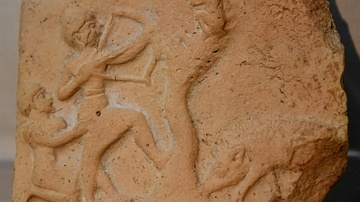
Mesopotamian Plaque Showing a Man Shooting at a Monkey
Clay plaque showing a man shooting at a monkey. The monkey is in the branches of a tree, in the centre. There is a boar at the foot of the right side of the tree. A kneeling man assists the shooter...
Image
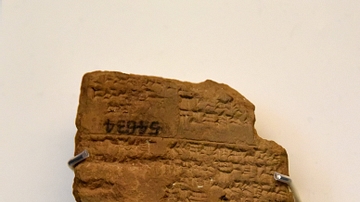
Mesopotamian Tablet Describing the Walls of Babylon
This clay tablet fragment gives detailed measurements for the inner city wall called Imgur-Enlil at the start of Nebuchadnezzar II's reign. It names landmarks including Zababa and Urash gates. Modern...
Image
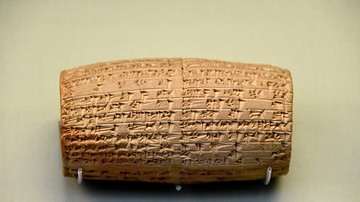
Mesopotamian Cylinder Naming Nabonidus & Sacred Buildings
Clay cylinder with Babylonian characters, recording the restoration of Sin's ziggurat at Ur and also asking him to protect Nabonidus and his son Belshazzar. From Ur, Southern Mesopotamia, modern-day...

Image
Mesopotamian Tablet Naming Belshazzar
This adminsitrative document is dated to the "24th day of Kislimu in the 11th year Nabonidus, King of Babylon". It mentions "a slave of Bel-sharra-usur (Belshazzar),son of the king". Although Belshazzar is acting...

Image
Mesopotamian Ceramic Objects Used in Magical Liturgy
Three rounded ceramic objects with saw-teeth-like margins. They have small holes on both the ventral and the dorsal aspects. Upon moving them, a sound comes out as if there is a small object inside...

Article
Festivals in Ancient Mesopotamia - Courting the Goodwill of the Gods
Festivals in ancient Mesopotamia honored the patron deity of a city-state or the primary god of the city that controlled a region or empire. The earliest, the Akitu festival, was first...
Image
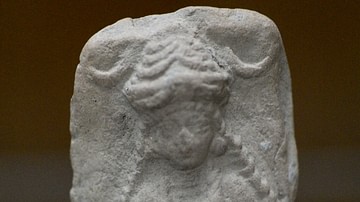
Seated Mesopotamian Goddess
Mesopotamian female deity wearing a horned headdress and sitting on a chair or a throne, probably goddess Ishtar or goddess Bau. The lunar symbol of the moon god Sin appears at the upper part, flanking the headdress...
Image
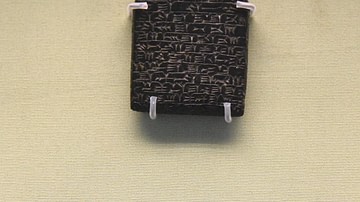
Mesopotamian Amulet Against Plague
Mesopotamian amulet covered with a quotation from a poem, the Akkadian Erra Epic, thought suitable to ward off plague. From Ashur, Northern Mesopotamia, Iraq. Neo-Assyrian Period, 800-612 BCE. The British Museum...

Article
Dogs & Their Collars in Ancient Mesopotamia - Man's Best Friend in the Ancient Near East
Among the many contributions to world culture credited to Mesopotamia is an object so familiar to people in the modern world that few pause to consider its origin: the dog...

Article
The Iraq Museum & Three Wars: Three Steps from Hell
This article documents and elaborates on the many critical behind-the-scenes events, unknown to the public, before the history leaves us. The author The bulk of the “the land between the two rivers”...
