
Search
Remove Ads
Advertisement
Search Results
Image
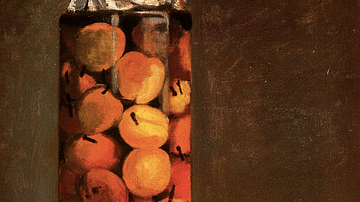
Jar of Peaches by Monet
An 1866 oil on canvas still life, Jar of Peaches, by Claude Monet (1840-1926), the French impressionist painter. The artist has here captured the octagonal glass jar, veined marble top, and the reflection of the peaches...

Image
Jar with Signs of Early Egyptian kings
This is a cylinder pottery jar (Type 50 B, pinkware). The name of King KA (and contents) was brushed on the jar using a black ink. King KA ruled just before the 1st Dynasty in Egypt. In general, few vessels from...
Image
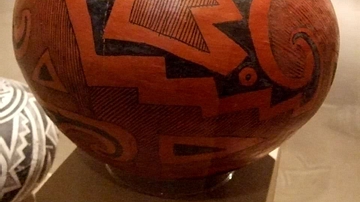
Anasazi Jar in the Wingate Style
A ceramic storage jar from the Anasazi civilization of northern America. The jar displays the typical geometric black on red designs of the Wingate Style, 1125-1200 CE. (Dallas Museum of Art, Dallas, USA).
Image
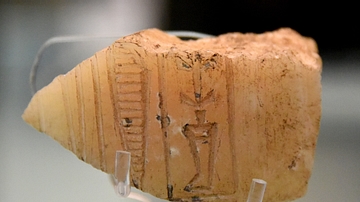
Fragment of Stone Jar Inscribed with the Name of Rimush
This small fragment came from a large upright stone jar. The jar was inscribed with the name of the Akkadian king Rimush, son of Sargon. Akkadian Period, reign of Rimush, 2278-2270 BCE. From Ur...
Image
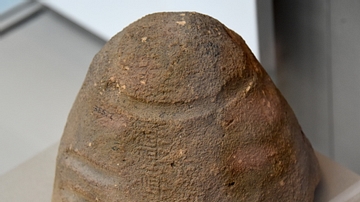
Jar Sealing of Narmer
The name Narmer, written as a catfish within a serekh (royal name box), has been impressed with a large cylinder seal several times onto this conical jar lid. The chisel, the second element of Narmer's name and perhaps originally...
Image
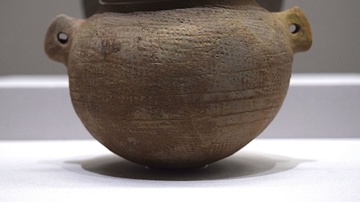
Ancient Korean or Japanese Jar
This jar was excavated from a box-style stone coffin in Daishogunyama Tumulus on Tsushima, the Japanese island closest to the Korean peninsula. Its round body was created by lightly beating the outer surface of the...

Video
The Greek Myth of Pandora's Jar
Pandora and her jar or box a well-known figure from Greek myth, is known from the ancient literature as the first mortal woman who was crafted out of clay by the gods. The name Pandora can mean all- giving or the giver...

Image
Pottery Jar from Ninevite V Period
This pottery jar was handmade and painted. It is carinated and stemmed with four equidistant vertically perforated lugs on the carination. Ninevite 5 Period, 3000-2750 BCE. From Nineveh, Northern Mesopotamia, Iraq...

Image
Qvevri, Neolithic Terracotta Wine Jar
Terracotta wine jar, known as qvevri, with a capacity of approximately 100 litres (26 gal), the earliest Neolithic evidence for the beginnings of a wine culture in which wine dominated social and economic life...
Image
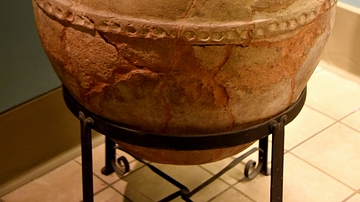
Assyrian Storage Jar
This jar was found in one of the wine-cellars in the arsenal at Nimrud (ancient Kalhu). It is marked in cuneiform with its capacity; 1 homer, 3 seah, 7 qa. In fact, it holds about 300 liters. Assyrian, late 7th century BCE...
