
Search
Remove Ads
Advertisement
Search Results
Image
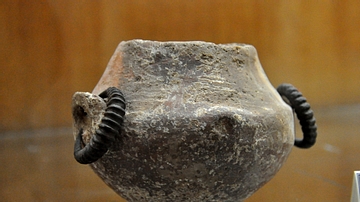
A Pottery Jar from Pangween
This pottery jar has two bronze handles and was found in the Nzara area near Pangween village of modern Sulaimaniya Governorate, Iraq. The Hellenistic period, 323-30 BCE. (The Sulaimaniya Museum, Iraq).
Image
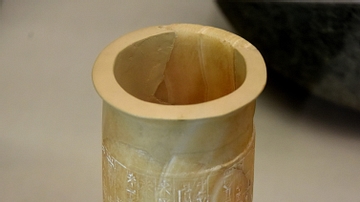
Cylindrical Calcite Jar from Ur
This jar was dedicated to Shulgi, king of Ur III dynasty, by the priestess Shuqurtum. There are two incised channels at the upper half; between them, the cuneiform inscription was placed. The inscription also curses...
Image
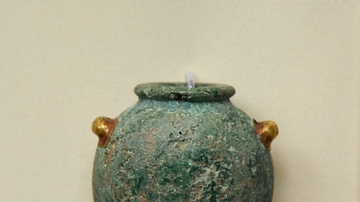
Malachite Jar with Gold Handles
The jar was precious, not only because of the golden handles, but also because of the material it is made of; malachite. Only one other example is known. It came from the tomb of pharaoh Djer, making it likely that...
Image
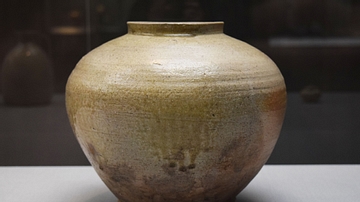
Ancient Japanese Jar
This ancient Japanese jar dates from the 8th century CE, which corresponds to the Nara period in Japanese history. It is made of clay and natural glaze. (Tokyo National Museum)
Image
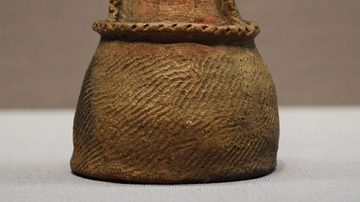
Prehistoric Japanese Jar
This jar comes from the Kanbayashi archaeological site, which is located in Kitakatashi in Fukushima prefecture, Japan. It dates from the 2nd-1st century BCE, during the Yayoi Period. (Tokyo National Museum)
Image
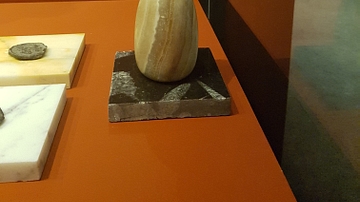
Ointment Jar From Pompeii
Alabaster ointment jar from Pompeii. 1st century CE. Soprintendenza Archeologica di Pompei, (National Martime Museum, Sydney Australia). Alabaster was used frequently for ointment vessels as the stone preserved the...
Image
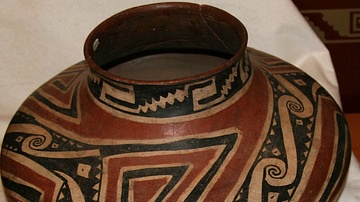
Salado Polychrome Jar
A Salado polychrome jar, typical of the Salado Culture style of decoration. 1340-1450 CE,
Arizona- New Mexico, USA.
Image
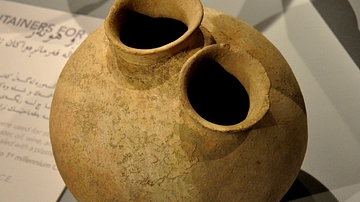
Double-Mouthed Bulbous Jar
This bulbous jar dates back to the early Bronze Age, 3150-2900 BCE, Mesopotamia, Iraq. (The Sulaimaniya Museum ,Iraq).
Image
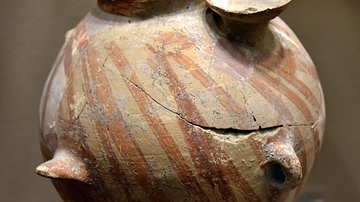
Painted Pottery Jar from Arqub az-Zahr
Jar decorated in red, like a burnished slip or groups of lines The spouts applied to some jars may have served as stands for dipper juglets. Early Bronze Age, 3600-3100 BCE. From Arqub az-Zahr, Jordan. (The Jordan...

Image
Painted Ceramic Jar From Khafajah
This is an example of a type of decorated pottery known as Scarlet Ware. The painting includes chariot and banquet scene with musicians. One musician plays a bull-headed lyre. The jar is the earliest object so far...
