
Search
Remove Ads
Advertisement
Search Results

Image
Mycenaean Stirrup Jar
A Mycenaean terracotta stirrup jar, c. 1200 BCE. The name derives from the resemblance of the handle to a double stirrup. The handle is often decorated with a false spout whilst the true spout is to the side and separate from...
Image
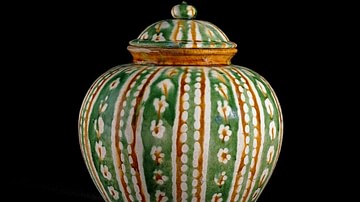
Tang Three-colour Glaze Jar
A storage jar with the three-colour glaze typical of ceramics made during China's Tang dynasty. 8th century CE. (British Museum, London)
Image
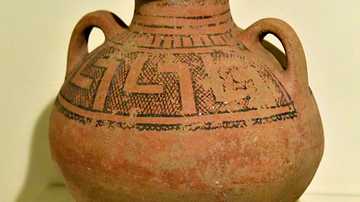
Jar from Phrygia
Double-handed terracotta jar from Phrygia, in modern-day Turkey. 7th-6th century BCE. (Museum of Archaeology, Istanbul, Turkey).
Image
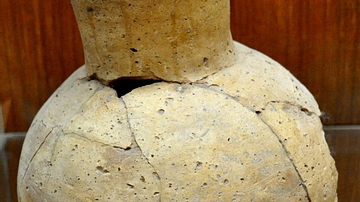
A Jar from Hassuna Culture
This ball-body jar was found in the Faida district of the modern city of Musil, Ninawa Governorate, Iraq. It dates back to the Hassuna period, 6th millennium BCE. (The Sulaimaniya Museum, Iraq).
Image
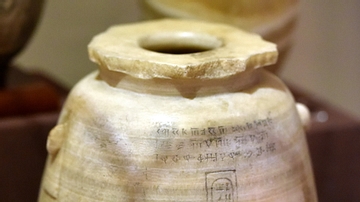
Jar of Xerxes I from Nimrud
This alabaster jar is inscribed with Elamite, Old Persian, and Neo-Babylonian cuneiforms. A cartouche of the Achaemenid king Xerxes I also appears. From Nimrud, in modern-day Ninawa Governorate, Iraq. Regin of Xerxes...
Image
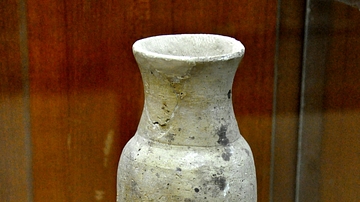
A Kassite Style Jar
This pottery jar has spindle-shaped Kassite-style contours and was found within the Kassite layers at the city of Ur. Kassite period, 1531-1155 BCE, Mesopotamia, Iraq. (The Sulaimaniya Museum, Iraq).
Image
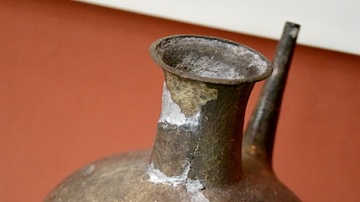
Spouted Jar from Ur
This silver jar has a long tube-shaped spout and a long neck. Similar spouted and pouring vessels were depicted in Sumerian banquet/feast scenes. Early Dynastic Period, circa 2600 BCE. From the Royal Cemetery at Ur, Southern...
Image
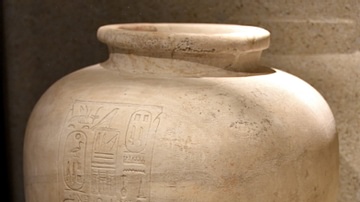
Jar of Pepi I
The hieroglyphic signs on this calcite-alabaster ovoid jar mention the name the Egyptian pharaoh Pepi I and his Sed festival, in addition to naming the pyramid complex of Pepi I (r. 2335-2285 BCE) at Memphis, the capital of the...
Image
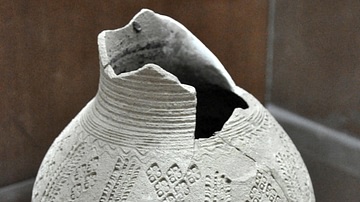
Pottery Jar from Hellenistic period
This partially broken jar dates back to the Hellenistic period, 323-30 BCE. From Mesopotamia, Iraq. (The Sulaimaniya Museum, Iraq).
Image
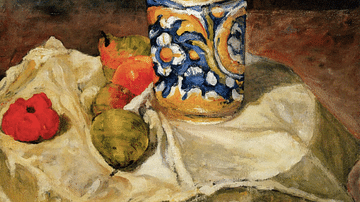
Still Life with Italian Earthenware Jar by Cézanne
A c. 1873 still life painting in oils, Still Life with Italian Earthenware Jar, by Paul Cézanne (1839-1906), the French post-impressionist artist. This painting shows the transition from impressionism...
