
Search
Did you mean: Bes?
Remove Ads
Advertisement

 This answer was generated by
Search Results
Article
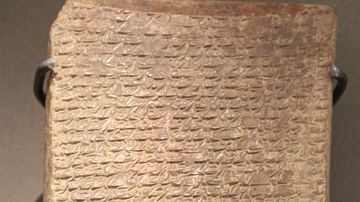
Ludlul-Bel-Nemeqi
The Ludlul-Bel-Nemeqi (c. 1700 BCE) is a Sumerian and later Babylonian poem on the theme of unjust suffering, which is thought to have influenced the biblical Book of Job. Also known as The Poem of the Righteous Sufferer, the...
Image
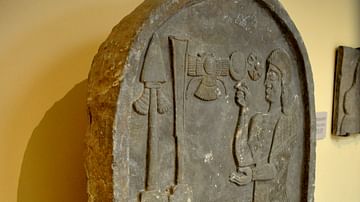
Stele of Bel-harran-beli-usur
Bel-harran-beli-usur was a high palace official (chamberlain) during the reign of the Assyrian kings Shalmaneser IV (782-773 BC) and Tigleth-Pileser III (744-727 BC). He built a city and a large temple to the west of...
Image
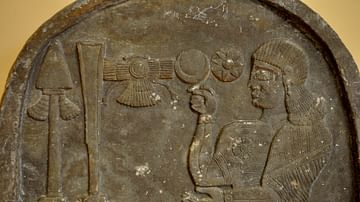
Stele of Bel-harran-beli-usur, close-up
Bel-harran-beli-usur was a high palace official (chamberlain) during the reign of the Assyrian kings Shalmaneser IV (782-773 BC) and Tigleth-Pileser III (744-727 BC). He built a city and a large temple to the...
Image
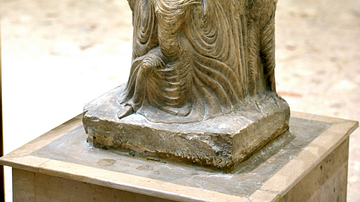
Statue of Assur Bel from Hatra
This limestone statue, now headless, was found in the 5th temple, and probably depicts Assur. On the other hand, some scholars thinks this statue is of Za'im Mu'la. It depicts a male figure wearing full military attire...
Image
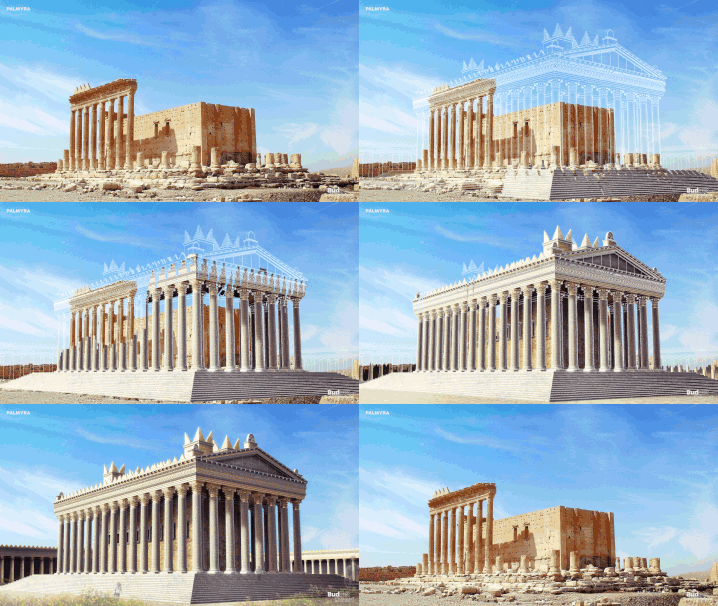
Temple of Bel, Reconstructed
A modern restoration of the Temple of Bel (also known as the Temple of Baal) in Palmyra. The temple was constructed in 32 CE, and was one of the most well-preserved temples in Syria until it was partially destroyed by...
Image
Ludlul-Bel-Nemeqi
Tablet of the Sumerian and later Babylonian poem Ludlul-Bel-Nemeqi, also known as The Poem of the Righteous Sufferer, from Library of Ashurbanipal the 7th century BCE, Nineveh Deposit from the British Museum at the Louvre Museum...

Definition
Armenian Mythology
The mythology of ancient Armenia is a rich blend of indigenous traditions with imported ideas from neighbouring cultures and migrating peoples added over the centuries. The legends and stories helped to explain natural phenomena...

Definition
Behistun Inscription
The Behistun Inscription is a relief with accompanying text carved 330 feet (100 meters) up a cliff in Kermanshah Province, Western Iran. The work tells the story of the victory of the Persian king Darius I (the Great, r...

Definition
Marduk - The Great God of Babylon
Marduk was the patron god of Babylon who presided over justice, compassion, healing, regeneration, magic, and fairness, although he is also sometimes referenced as a storm god and agricultural deity. He rose to prominence...

Definition
Movses Khorenatsi
Movses Khorenatsi (Moses of Khoren) was a 5th-century CE Armenian historian whose work the History of the Armenians has earned him the title of the “father of Armenian history”. Drawing on ancient sources and ambitiously covering...
