Between roughly 1450 and 1648, Europeans both changed their view of the world and their place in it. Humanists in the Italian city-states revived the study of classical literature and philosophy while patrons such as the Medici and the popes commissioned art and architecture. The printing press carried these ideas northwards, where Erasmus and Thomas More applied humanist learning to religious and social reform. At the same time, monarchs in Spain and England built centralized states. Portuguese and Spanish navigators opened sea routes to Asia and the Americas, starting the Columbian Exchange and the transatlantic slave trade, and imported a vast amount of American silver that shifted Europe's economic centre from the Mediterranean to the Atlantic.
This collection collates articles, definitions, maps, and infographics covering Unit 1: Renaissance and Exploration of the AP® European History curriculum, which accounts for 10–15% of the exam and around 15 class periods. It offers an overview for teachers and students alike, providing the materials needed to explore how the revival of classical learning, the rise of centralized states, and overseas expansion reshaped European society and its relationship with the wider world.
Unit 1 covers eleven topics: 1.1 Contextualizing Renaissance and Discovery · 1.2 Italian Renaissance · 1.3 Northern Renaissance · 1.4 Printing · 1.5 New Monarchies · 1.6 Technological Advances and the Age of Exploration · 1.7 Rivals on the World Stage · 1.8 Colonial Expansion and Columbian Exchange · 1.9 The Slave Trade · 1.10 The Commercial Revolution · 1.11 Causation in the Renaissance and Age of Discovery
⬇️ Scroll down to see the collection!
Ideas for Teachers
- Art as a statement: Using the Patrons & Artists in Renaissance Italy article, ask your students to identify what rich private patrons, ruling families like the Medici and Gonzaga, and the popes each wanted from the commissioned art they paid for. Have them read the contract for a 1466 Padua painting quoted in the article to determine what the patron controlled and what was left to the artist to decide.
- Humanism in the service of reform: Have students read the Desiderius Erasmus and Sir Thomas More articles. Then ask them how Praise of Folly and Utopia criticized the Church and Tudor England using satire and an imagined society. Finally, discuss why Erasmus believed in education, rather than doctrinal conflict, as the way to reform the Church.
- Printing by numbers: Using the article The Printing Revolution in Renaissance Europe, have students graph estimates of books printed in Europe: 2 million in the first decade of the 1500s, 20 million by 1550, and around 150 million by 1600. Ask them to choose two effects of printing listed in the article to argue which mattered more for the spread of new ideas in Europe.
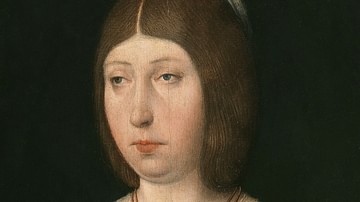
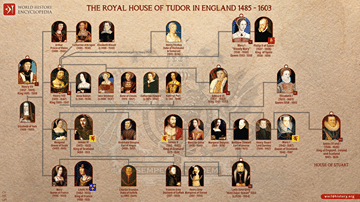
- The new monarch's toolkit: Have students read the Isabella I of Castile and Henry VII of England articles. Ask them to sort each ruler's actions into four categories: taxation, military force, justice, and religion. Discuss which methods worked best for taming powerful nobles and which categories the two rulers relied on most, respectively.
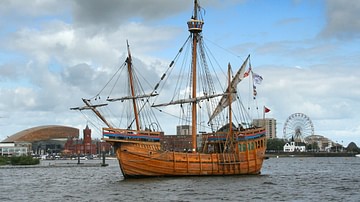
- Motives and justifications: Using the Spice Trade & the Age of Exploration and Christopher Columbus articles, ask students to list the economic, religious & political motives behind the first voyages. Then, have them read about the 1550 Valladolid debate in our Bartolomé de Las Casas article. Discuss how Christianity was used to both justify conquest and to condemn it.
- Silver and prices: Ask students to read The Silver of the Conquistadors article. Have them explain why American silver, which helped drive prices up by around 400% over the 16th century, did not make Spain lastingly rich. Then compare the Map of the Spanish Empire and the Indies with the Map of the Dutch Commercial Empire, c. 1665. Discuss who benefited from Spain's silver in the long run.
Browse the collection below to find materials that fit your teaching style and feel free to adapt them to your students. Note that our articles are print-friendly, and there is a PDF export button on each article page.
AP® and Advanced Placement® are trademarks registered by the College Board, which is not affiliated with, and does not endorse, this collection.