



The Taj Mahal is a mausoleum complex in Agra, Uttar Pradesh, northern India. Commissioned by the Mughal Emperor Shah Jahan to inter and memorialise his wife Mumtaz Mahal, the building is the finest complete example of Mughal architecture. For its perfect symmetry within a garden complex, soaring central dome, and exquisite Islamic sculpture and inscriptions rendered in gleaming white marble, the building was designated a UNESCO World Heritage Site in 1983.
The Beloved Mumtaz Mahal
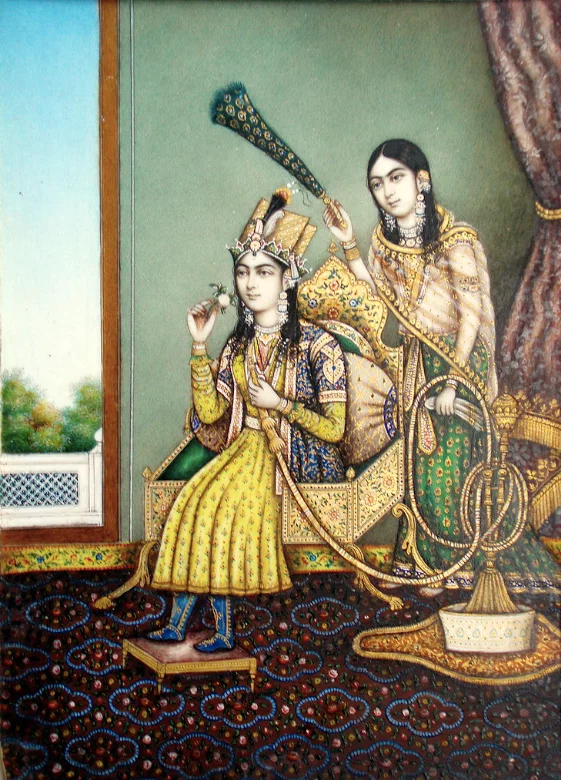
The Taj Mahal was commissioned by the Mughal emperor Shah Jahan (born 1592, reign 1628-1658) as a mausoleum for his favourite wife and empress Mumtaz Mahal (original name Arjumand Banu Begum, born 1593) following her early death in childbirth in 1631. Mumtaz had married the emperor in 1612 when he was still a prince and his father, Jehangir, was emperor of the vast Mughal Empire, which controlled varied population groups, including both Muslims and Hindus. The royal couple had 14 children together. The empress consort's name translates as "Chosen of the Palace" or "Exalted One of the Palace," and the emperor was determined that her mausoleum would live up to such a moniker. The idea of a large mausoleum for Mughal royalty was not a new one; indeed, the tradition began around 1565 with the construction of the gigantic mausoleum of Emperor Humayun in Delhi by his devoted widow Bega Begum.
Three Designers
Shah Jahan selected the site for the mausoleum, located on the southern bank of the Yamuna (aka Jumna) River, and he paid Raja Jai Singh of Amber four estates for the land. The emperor, as court records show, was also involved in the design of the buildings. The project's chief architect was Ustad Ahmad Lahori (circa 1580-1649), who would go on to design the Red Fort in Shahjahanabad (Delhi), the administrative centre of the Mughal emperors. Ustad Ahmad Lahori, who was of Persian descent, was also an engineer and an astronomer. A third key member of the design team was Amanat Khan, a Persian artist famous for his calligraphy, who provided many of the Taj Mahal's distinctive decorative elements.
The Taj Mahal is the example par excellence of Mughal architecture, a style which blends features of Persian, Indian, and Islamic architecture. Naturally, for such a large project, many masons and artists were required, and these came from across the Mughal Empire, including Persia and Central Asia.
Layout
Construction began in 1632, but it would take 17 years to complete. Built using white marble, the main building is actually part of a cohesive complex of structures and formally designed gardens, all with ideas of symmetry at their heart. The complex covers 42 acres, and the rectangular ground plan measures 958 metres (3,143 feet) in length and 365 metres (1,200 feet) in width.
Mughal mausoleums were commonly placed at the centre of their surrounding complex but not so here. The main building, which contains the tomb itself, is located at one side of the rectangle (the side nearest the river), and is approached through formal gardens cut into four parts by a waterway with a central square reflecting pool.
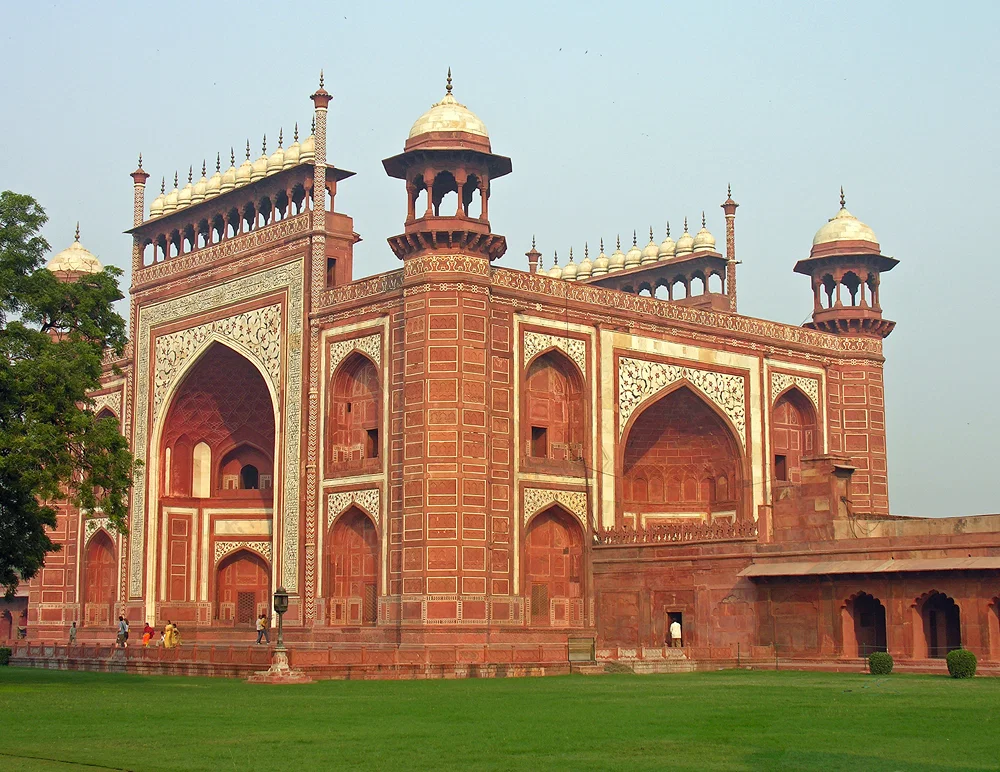
The other major structures include monumental red brick gate structures on each side of the complex except the northern one: the Fatehbadi, Sirhi, and Fatehpuri gates. There are two twin buildings, one on either side of the tomb building. One is a mosque, and the other is a jawab, or symmetrical 'answer' to the mosque, a typical feature of Mughal architecture which has no religious purpose. Both of these buildings were built using red sandstone and, for the domes, white marble. Guest houses in the same style as the mosque and a perimeter wall complete the complex.
The Main Building
The main tomb building sits on a high square platform, although each of the building's four corner towers overlap the platform below. The platform measures 341 metres (1,119 feet) by 128 metres (420 feet) and rises 6 metres (19.6 feet) above ground level. Access to the platform is provided by steps in the centre of the southern side. To ensure flooding from the river did not seriously damage the building, large cylindrical wells were dug into its foundations.
The four corner minarets are free-standing, another innovation in Mughal architecture. In contrast, the four corner towers of the main building are hexagonal, and each has its own cupola. The much larger central dome is 85 metres (279 feet) high and 18.4 metres (60 feet) in diameter at its maximum. The dome is supported by eight octagonal columns connected by arches.
The main building is dominated by its large, deeply embayed arch which rises two stories. The arch is flanked by two smaller versions on either side. The main building measures 57.3 metres (188 feet) in width and height. The interior tomb chamber, which measures 17.7 metres (58 feet) on each side, is octagonal and surrounded by portal rooms and the four chambers within the towers. The second floor repeats the same plan as the ground floor.
The tomb's facing of white Makrana marble, which covers the red sandstone and lime mortar interior structure, came from several quarries across Rajasthan. Additional decoration was provided using coloured marble, gold, and the setting of thousands of semiprecious stones. Although most of these stones have since been plundered from the building, they would have once added a contrasting splash of vibrant colour to the plain white of the marble. The stones used included amethyst, coral, garnet, jade, lapis lazuli, and turquoise.
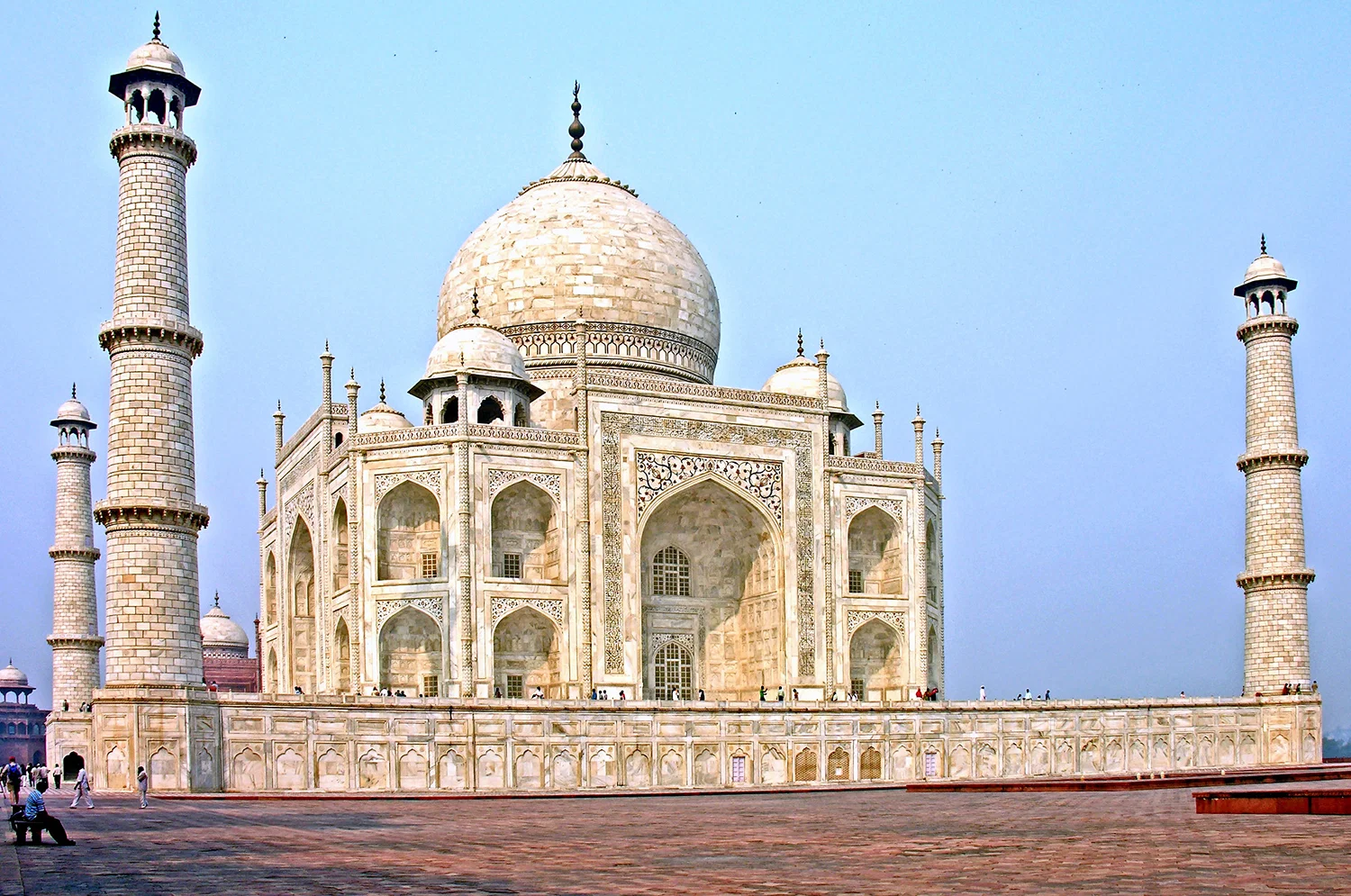
The Taj Mahal's marble changes hue depending on the angle of the sun and the strength of sunlight. Moonlight can also change the appearance of the marble. The play of shadows created by the architecture is a deliberate design feature, providing stark contrasts of light and shadow but also of shapes such as curves, arches, and solid straight lines. The innovative positioning of the tomb at the end of the garden means that these features can both change and be appreciated as the visitor approaches it.
Symbolism
The Taj Mahal and its garden layout were designed with a particular reference to the Islamic vision of resurrection and paradise in the afterlife. These religious motifs were further enhanced by Amanat Khan's addition of marble inlaid texts from the Quran, a strong tradition in Islamic architecture. In essence, the Taj Mahal is a representation of how Mumtaz Mahal would reside in paradise as envisioned by Muslim believers, a sort of heavenly mansion. This is explicitly stated in a quotation from the Quran across the main gateway (89:28-30), which invites the visitor to now enter paradise. The idea that the empress would have all she needed in the next life is evident in the complex having its own mosque, assembly hall, accommodation for servants, and space for bazaars.
The whole complex, like many buildings commissioned by Shah Jahan, carried messages of the emperor's views on power, politics, and religion, as here explained by historian P. Mitta:
Shah Jahan's first love was architecture, which was a synthesis of his aesthetic and political ideas…Literary sources inform us that a critical appreciation of architecture was taken for granted at the court, the emperor providing the aesthetic leadership through his department of architecture.
Abandoning Akbar's architectural ideology, which sought to reconcile Hindus and Muslims, Shah Jahan consciously returned to the Sultanate roots. The most singular aspect of his architectural style was its formal harmony, which was enhanced by the magical quality of the soft marble he used. Buildings were governed by hierarchical stresses, seeking bilateral symmetry through the emphasis on both wings of the central axis, in contrast to previous centrally planned structures. Architectural uniformity was achieved by the repetition of a few significant forms and motifs embodying a complex symbolic message that reinforced the doctrine of divine kingship. The motifs themselves had mixed Iranian, Hindu/Buddhist, and European pedigree…The Taj Mahal was also the first monument to translate Shah Jahan's concept of absolute authority into architecture.
(131-4)

The repeated design motifs present in the Taj Mahal described by Mitta include:
- Columns with multifaceted capitals (muqarnas)
- Baluster columns
- Cusp-arch bases
- High reliefs of acanthus plants and rose, narcissus, and tulip flowers
- Semicircular arches
- Designs of cornucopia (purna ghata)
- Bangala curved roofs and cornices
- Pietra dura where semiprecious stones and inlays create decorative patterns and scenes
- Arabic calligraphy
As the architectural historian J. C.Harle notes: "Participation by European architects is utter myth: no building could be more purely Mughal in style and conception" (442).
Legacy
Shah Jahan was certainly attempting not only to give his lost wife a certain immortality in stone but also to provide his subjects with monumental evidence of his wealth, power, and divine legitimacy to rule. The emperor would go on to beautify his capital, Shahjahanabad, located just a mile or so downriver from the Taj Mahal, with similarly gigantic buildings such as palaces, public halls, mosques, and gardens, for the same reasons. Indeed, the emperor had yet more plans, but these were never realised following his removal from power in 1658, when his son, Aurangzeb, took over by force, having defeated his brothers in a year-long struggle while their father was seriously ill.
One such architectural plan never realised, at least according to tradition, was for the emperor to have his own giant mausoleum built on the other side of the river from the Taj Mahal. This tomb would have been built using black stone with a bridge spanning the river and joining the two mausoleums, connecting, as it were, for all time Shah Jahan and Mumtaz Mahal.
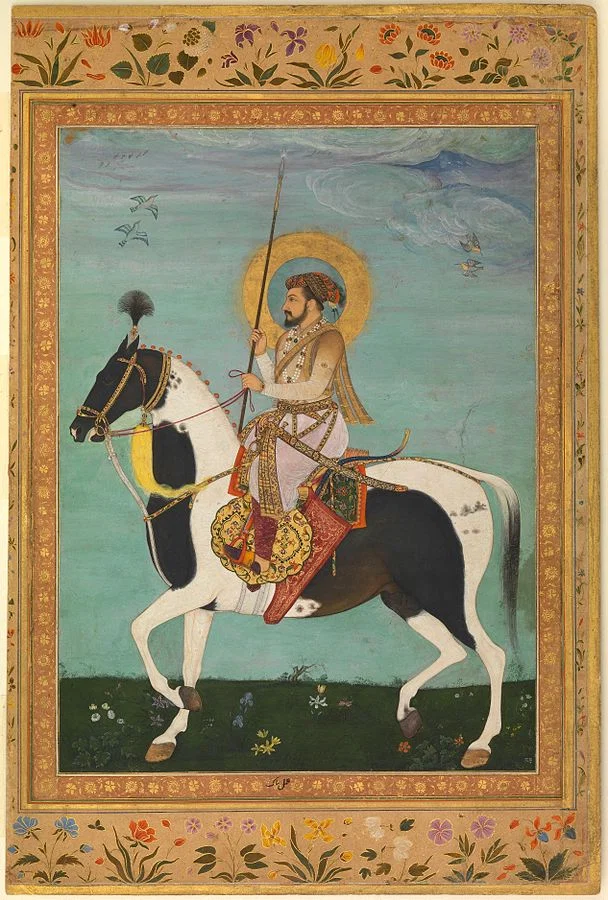
Shah Jahan found himself in prison after the coup, locked up for nine years in the Red Fort he had built. The ex-emperor would have seen the Taj Mahal from his window. Following his death in 1666, Shah Jahan was ultimately interred alongside his wife; both his and Mumtaz Mahal's cenotaphs were enclosed within a large marble lattice screen (but each body was laid to rest out of sight below these faux cenotaphs).
Restoration began on the Taj Mahal in the early 20th century, and, to remove the effects of air pollution, further work continued at the other end of the same century. Pollution has since been reduced by restricting factories and vehicle traffic in a wide zone around the Taj Mahal complex, a situation monitored by the installation of air-quality control stations. Today, the Taj Mahal, which is one of the most visited places on the subcontinent, is managed by the Archaeological Survey of India.


