


The Kish Tablet, illustration by José-Manuel Benito, July 2006.
The Kish Tablet, from Tell al-Uhaymir, Iraq, is among the oldest known inscriptions using proto-cuneiform symbols. Before this, writing was limited to numerical marks carved into small clay tokens. As urbanisation advanced in the Late Uruk Period (c. 3500-2900 BCE), many aspects of civilisation developed in more organised and systematic ways than ever before. Innovations in agriculture, architecture, and industry, together with expanding administration and trade, transformed several Mesopotamian settlements into cities in the full sense of the word. The shift from basic to more complex administrative and commercial record-keeping is reflected in the addition of pictorial symbols (pictographs) to simple numerical signs in the inscriptions of Uruk III.
The earliest group of these proto-cuneiform inscriptions, comprising 3,094 tablets, was retrieved from several sites in modern Iraq, including Jemdet Nasr, Umma, Eshnunna, Larsa, and Kish. The Kish Tablet is considered a later example because it is inscribed on both sides and its text is arranged in divided sections. Although the pictographic symbols on this limestone tablet, including signs for body parts such as the head, hand, and foot, remain undeciphered, they are described as "proto-cuneiform" because they are considered to be forerunners of the later-developed cuneiform writing.
License & Copyright
 Based on Wikipedia content that has been reviewed, edited, and republished. Original image by José-Manuel Benito. Uploaded by Nathalie Choubineh, published on 18 June 2026. The copyright holder has published this content under the following license: Public Domain. This item is in the public domain, and can be used, copied, and modified without any restrictions. Please note that content linked from this page may have different licensing terms.
Related Images

Stone Calf from Late Uruk Era

Uruk-Period Beveled Rim Bowl
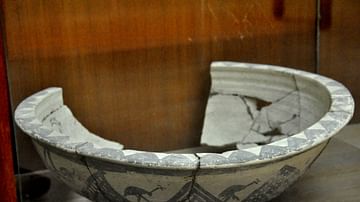
Pottery Dish from Uruk Period
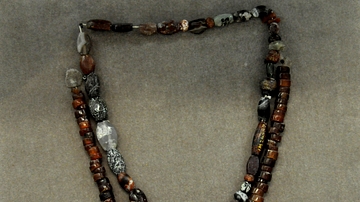
Necklaces from Uruk Period

Dog-Shaped Gold Amulet From Kish - Neo-Babylonian Period, 700-500 BCE

Cuneiform Tablet with Envelope from Alalakh
Cite This Work
APA Style
Benito, J. (2026, June 18). The Kish Tablet: And the Earliest Evidence of Writing. World History Encyclopedia. https://www.worldhistory.org/image/21835/the-kish-tablet/
Chicago Style
Benito, José-Manuel. "The Kish Tablet: And the Earliest Evidence of Writing." World History Encyclopedia, June 18, 2026. https://www.worldhistory.org/image/21835/the-kish-tablet/.
MLA Style
Benito, José-Manuel. "The Kish Tablet: And the Earliest Evidence of Writing." World History Encyclopedia, 18 Jun 2026, https://www.worldhistory.org/image/21835/the-kish-tablet/.
