


Dog-shaped amulet, gold sculpture, Kish, modern-day Babil Governorate, Iraq, 700-500 BCE.
Kish, in ancient Mesopotamia, was one of the major centres of political power and economic activity under the Sumerians and Babylonians. Its prosperity is reflected in valuable artefacts recovered from the archaeological site of Tell al-Uhaymir (“the red hill”) in Iraq. The small gold amulet shown here was excavated there in 1930 and is now held in the British Museum. Regarded as objects with protective divine power, amulets of this kind have been linked to Gula (also known as Ninkarrak), the goddess of healing and patron of medical practitioners. The ring hook on the back suggests that this dog-shaped amulet may have been worn as a pendant or attached to clothing for protection.
The amulet dates to between 700 and 500 BCE, possibly during the reign of the Neo-Babylonian king Nebuchadnezzar II (605/604-562 BCE). He is associated with Kish’s final period of prosperity, marked particularly by his major refurbishment and enlargement of the city’s great ziggurat dedicated to the war god Zababa and the goddess Ishtar.
British Museum, London.
Related Images
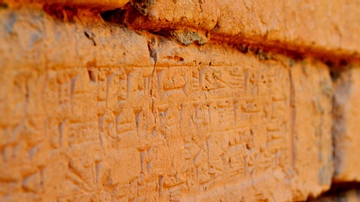
Stamped Mud Brick, Babylonia, Mesopotamia

Gula
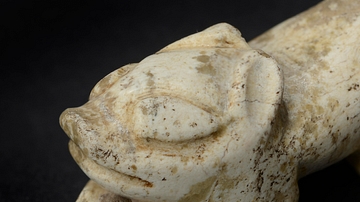
Chinese Nephrite Jade Dog Amulet
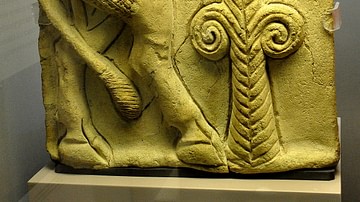
Terracotta Plaque Dedicated to Gula
Correya Dog Jade Amulet Face

Chinese Nephrite Jade Dog Amulet
Cite This Work
APA Style
Museum, B. (2026, June 15). Dog-Shaped Gold Amulet From Kish: Neo-Babylonian Period, 700-500 BCE. World History Encyclopedia. https://www.worldhistory.org/image/21870/dog-shaped-gold-amulet-from-kish/
Chicago Style
Museum, British. "Dog-Shaped Gold Amulet From Kish: Neo-Babylonian Period, 700-500 BCE." World History Encyclopedia, June 15, 2026. https://www.worldhistory.org/image/21870/dog-shaped-gold-amulet-from-kish/.
MLA Style
Museum, British. "Dog-Shaped Gold Amulet From Kish: Neo-Babylonian Period, 700-500 BCE." World History Encyclopedia, 15 Jun 2026, https://www.worldhistory.org/image/21870/dog-shaped-gold-amulet-from-kish/.
