

 2
This text is available in other languages:

The Vedic Age (c. 1500–500 BCE) was a formative period in the history of South Asia, named after the Vedas, a collection of sacred hymns and ritual texts composed in Vedic Sanskrit and transmitted orally. During the second millennium BCE, Indo-Aryan-speaking groups migrated into northwestern South Asia, interacting with existing populations and contributing to the development of Vedic traditions. Early Vedic society was organized around pastoral and agricultural communities, kinship groups, and chiefs (rajas), with religious rituals playing a central role in social and political life.
From c. 1000 BCE, expanding agriculture, iron technology, and the eastward spread of Vedic traditions accompanied growing social stratification, including the development of the varna system. Larger territorial states gradually emerged across the Ganges basin, culminating in the Mahajanapadas ("Great Realms") by the 6th century BCE. Their rise marked a transition toward urbanization, more complex political institutions, and new intellectual and religious movements, including Buddhism and Jainism.
About the Author
Related Images

Map of the Indus Valley Civilization, c. 3300-1300 BCE - Cities, Trade, and Settlement in the Bronze Age

Major Indo Iranian Neolithic Sites & the Indus Civilization

Indus Valley Civilization - Mature Harappan Phase

The Four Castes of Ancient India - The Varna System
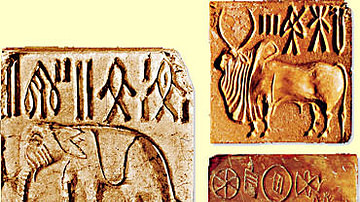
Indus Valley Seals

Map of the Iron Age La Tène Culture c.400 BCE - c.50 CE
Cite This Work
APA Style
Netchev, S. (2026, November 04). Map of the Vedic Age in South Asia, c. 1500–500 BCE: Indo-Aryan Migrations, Vedic Culture & Early States. World History Encyclopedia. https://www.worldhistory.org/image/14540/map-of-the-vedic-age-in-south-asia-c-1500-500-bce/
Chicago Style
Netchev, Simeon. "Map of the Vedic Age in South Asia, c. 1500–500 BCE: Indo-Aryan Migrations, Vedic Culture & Early States." World History Encyclopedia, November 04, 2026. https://www.worldhistory.org/image/14540/map-of-the-vedic-age-in-south-asia-c-1500-500-bce/.
MLA Style
Netchev, Simeon. "Map of the Vedic Age in South Asia, c. 1500–500 BCE: Indo-Aryan Migrations, Vedic Culture & Early States." World History Encyclopedia, 04 Nov 2026, https://www.worldhistory.org/image/14540/map-of-the-vedic-age-in-south-asia-c-1500-500-bce/.
