


Between c. 700 and 300 BCE, the Scythians and related Saka peoples inhabited vast regions of the Eurasian steppe, from the northern Black Sea to Central Asia and the Altai Mountains. Rather than forming a unified empire, these diverse societies developed interconnected cultures characterized by mobile pastoralism, horseback warfare, distinctive animal-style art, and richly furnished burial mounds known as kurgans.
The Scythian world influenced neighboring civilizations through warfare, diplomacy, migration, and trade. Scythian groups intervened in the affairs of the Neo-Assyrian Empire, confronted the Achaemenid Persians, and maintained extensive commercial ties with Greek settlements along the Black Sea. By the fourth and third centuries BCE, Sarmatian expansion and shifting regional powers transformed the political landscape, while Scythian cultural traditions continued to influence societies across Eurasia.
Special thanks to Patrick Scott Smith for his research and input.
About the Author
Related Images

Map of the Indo-Saka Kingdoms

Map of the Achaemenid Persian Empire c. 500 BCE
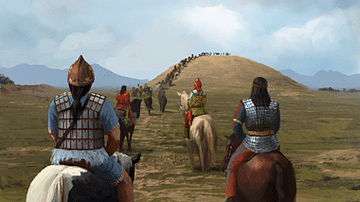
Scythian Funeral Procession
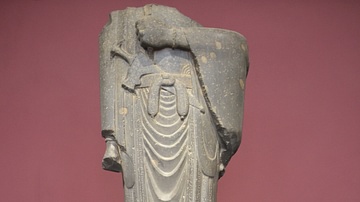
Headless Statue of Darius the Great

Scythian Noblewomen, 4th-3rd Century BCE

Scythians Shooting with Bows
Cite This Work
APA Style
Netchev, S. (2026, October 13). Map of the Scythian World, c. 700–300 BCE: Scythians, Saka, and Cultures of the Eurasian Steppe. World History Encyclopedia. https://www.worldhistory.org/image/14359/map-of-the-scythian-world-c-700-300-bce/
Chicago Style
Netchev, Simeon. "Map of the Scythian World, c. 700–300 BCE: Scythians, Saka, and Cultures of the Eurasian Steppe." World History Encyclopedia, October 13, 2026. https://www.worldhistory.org/image/14359/map-of-the-scythian-world-c-700-300-bce/.
MLA Style
Netchev, Simeon. "Map of the Scythian World, c. 700–300 BCE: Scythians, Saka, and Cultures of the Eurasian Steppe." World History Encyclopedia, 13 Oct 2026, https://www.worldhistory.org/image/14359/map-of-the-scythian-world-c-700-300-bce/.
