
Search
Did you mean: Epona?
Remove Ads
Advertisement
Search Results

Image
Stone of Destiny, Hill of Tara
The Neolithic Lia Fail (Stone of Destiny), Hill of Tara, County Meath, Ireland, by which the ancient kings were inaugurated.
Image
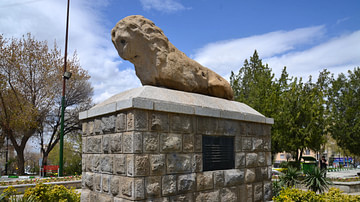
Stone Lion of Hamadan, Iran
The Stone Lion of Hamadan, which once had a twin, was part of the old gate of the city of Ecbatana in Persia (modern-day Iran). According to some accounts, the lions were built upon the order of Alexander the Great (r...

Image
Stone Mould for Axes & Bronze Axe from Ancient Ireland
The stone mould, used for making flat and flanged axes, was found at Crannong, Loughscur, Co. Leitrim, Ireland. The bronze axe was found at Lisboy, Co. Meath, Ireland. Both date back to 2500-1700...
Image
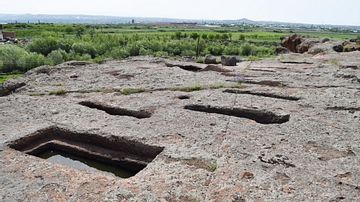
Stone Carved Indentations at Agarak
These indentations in stone found at the Agarak archaeological site were likely used for rituals involving wine and "holy water." They come in a variety of sizes and shapes. The ancients of Agarak believed these...
Image
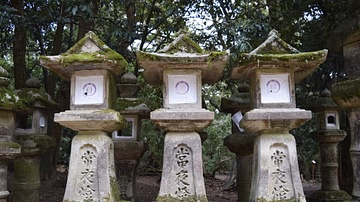
Stone Lanterns, Kasuga Shrine
Stone votive lanterns at the Kasuga Taisha Shinto shrine, Nara, Japan. Founded in 768 CE (or 710 CE) during the Nara period.

Image
Stone for harvest offerings
The stone Kernos for food offerings of the collected harvest, the Minoan settlement of Malia, Crete (1650-1450 BCE).

Image
Stone Tools at Shengavit Settlement
Stone tools and other archaeological remains from Shengavit, dating from c. 3500-2200 BCE. This settlement is an archaeological site located in Yerevan and is one of Armenia's most important Bronze Age sites.
Image
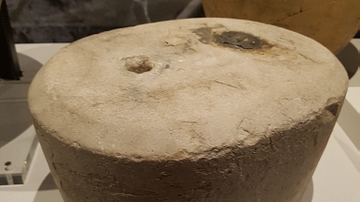
Stone Weight From The Comacchio Shipwreck
A Centussis weight used to weigh the cargo for sale. The stone is inscribed with an 'M' for Magister Navis, the ship's master and the initials 'TRVF', possibly for his name - either Titus Rufius or Titus Rufrenius...
Image
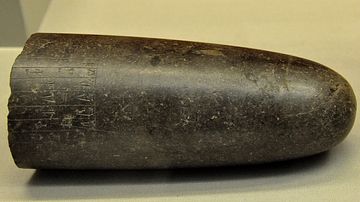
Stone Weight from Sippar
The inscription, unusually for a weight, is cut in reverse. It mentions that this stone weight was dedicated to the temple of Shamash, the sun god, at Sippar. It precisely gives the weight as 10 mina, 15 shekels, a little...
Image
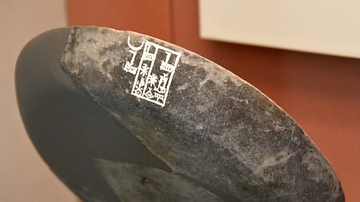
Stone Plate of Enmahgalanna from Ur
This is a polished grey stone, which was probably an offering stand. The name (and title) of "Enmahgalanna" appears and is repeated unusually with a pictogram of the moon's crescent (instead of using the pertinent...
