
Search
Did you mean: Epona?
Remove Ads
Advertisement
Search Results
Image
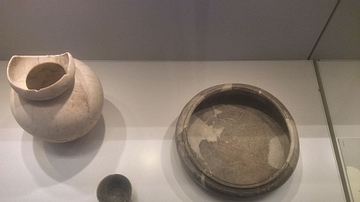
Stone Vessels from Tel Kabri
Some of the stone vessels found at Tel Kabri in 1956. These vessels are from the Wadi Rabah material culture which inhabited Tel Kabri and the surrounding area from 4500–3500 BCE. These objects are now on display in...
Image
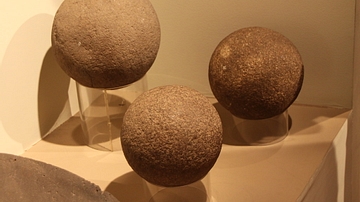
Stone Spheres
Stone Spheres, Jade Museum, San Jose, Costa Rica.

Image
Stone Architecture at Tatev Monastery
Tatev Monastery was one of medieval Armenia's most important religious and cultural centers during the Middle Ages. It's renown for its stone architecture and location on a large basalt plateau near the Tatev...
Image
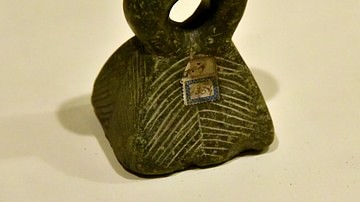
Stone Seal from Gordion
Stone Seal from Gordion (Gordium), the capital city of ancient Phrygia, in modern-day Turkey. First half of the 1st century BCE. (Museum of Archaeology, Istanbul, Turkey).
Image
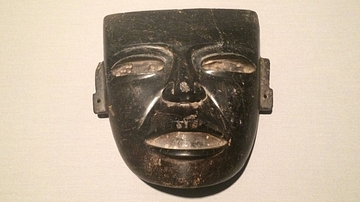
Stone Mask, Teotihuacan
A stone mask from Teotihuacan, 250-600 CE. (St. Louis Art Museum, Missouri)

Image
Stone-carved Medusa head from the temple of Apollo at Didyma
This giant Medusa head was formerly part of a frieze on the architrave of the Apollo Temple at Didyma (Turkey).
Image
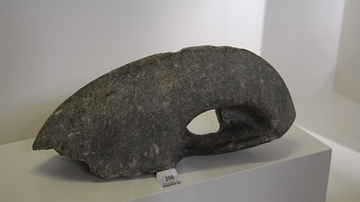
Stone Halter
A jumping weight carried by athletes in each hand in the long jump event to gain distance (date unknown). Olympia Archaeological Museum.
Image
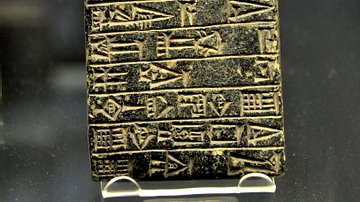
Stone Foundation Tablet of Gudea
This tablet mentions the name of Gudea, ruler of Lagash, to commemorate restoration of the Temple of Nindara. Found below the pavement of the Temple of Nindara at Ur, Southern Mesopotamia, modern-day Iraq. Lagash...
Image
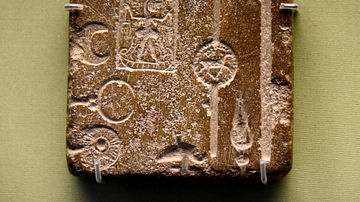
Stone Mould from Nineveh
This mould was used to make small and cheap metal amulets. One is an image of demonic Lamashtu, to keep her away from women and their new-borne infants. From Nineveh, Northern Mesopotamia, Iraq. Neo-Assyrian Period, 800-612...
Image
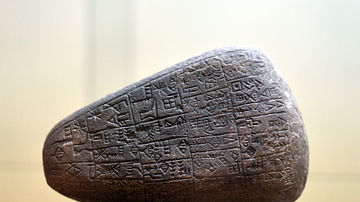
Stone Pebble of Prince Eannatum of Lagash
A variety of pebbles, clay tablets, and plaques were found at the ancient city of Lagash and girsu. The cuneiform inscriptions mention on them the name of Eannatum, prince and ruler of Lagash. The narration...
