
Search
Did you mean: Soma?
Remove Ads
Advertisement
Search Results
Definition
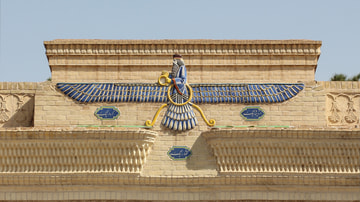
Zoroastrianism
Zoroastrianism is the monotheistic faith established by the Persian prophet Zoroaster (also given as Zarathustra, Zartosht) between c. 1500-1000 BCE. It holds that there is one supreme deity, Ahura Mazda (Lord of Wisdom), creator...

Definition
Satyr
Satyrs (aka silens) are figures from Greek mythology who were followers of the god of wine Dionysos. Satyrs were often guilty of excessive sexual desires and overindulgence of wine. Men with a horse's tail and ears or men with goat legs...

Definition
Mithra
Mithra is the Persian god of the rising sun, contracts, covenants, and friendship. He also oversaw the orderly change of the seasons, maintained cosmic order, and was responsible for bestowing divine grace on kings, legitimizing their...

Definition
Orpheus
Orpheus is a figure from ancient Greek mythology, most famous for his virtuoso ability in playing the lyre or kithara. His music could charm the wild animals of the forest, and even streams would pause and trees bend a little closer...

Definition
Krishna
Krishna (Krsna or Hari Krishna) is a major god of the Hindu pantheon and considered the eighth incarnation of Vishnu. He is perhaps the most popular of all the heroes of Hindu mythology. Krishna's adventures appear in the Mahabharata...
Definition
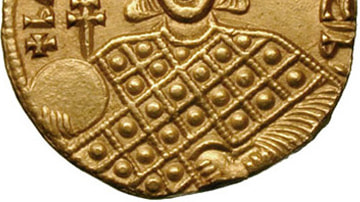
Basil I
Basil I was emperor of the Byzantine Empire from 867 to 886 CE and he founded the "Macedonian" dynasty which lasted for over 200 years. Basil was an Armenian from a humble background who had risen to become the second most powerful man...

Definition
Albigensian Crusade
The Albigensian Crusade (aka Cathars' Crusade, 1209-1229 CE), was the first crusade to specifically target heretic Christians - the Cathars of southern France. Not successful in repressing the heresy, the on-off campaigns over...

Definition
Cathars
The Cathars (also known as Cathari from the Greek Katharoi for “pure ones”) were a dualist medieval religious sect of Southern France which flourished in the 12th century and challenged the authority of the Catholic Church. They were...

Definition
Karakorum - Capital of the Mongol Empire
Karakorum (aka Qaraqorum, modern name: Harhorin) is located in the Orkhon Valley of central Mongolia and was the capital of the Mongol Empire from 1235 to 1263. Ogedei Khan (r. 1229-1241) ordered its construction...

Definition
Giovanni Boccaccio
Giovanni Boccaccio (1313-1375) was an Italian poet, writer, and scholar. His most famous and influential work is the Decameron, completed by 1353, in which his ten characters present 100 tales of everyday life. The book covers...
