
Search
Remove Ads
Advertisement
Search Results

Definition
Sistrum
The sistrum (rattle) was a musical percussion instrument first used by the ancient Egyptians, commonly used in ancient Greek musical practices, and often depicted in visual arts such as sculpture and pottery. Made from clay, wood, or...

Definition
The Graces
The Graces (also Charites, sing. Charis) were goddesses from Greek mythology who personified charm, grace, and beauty. Hesiod describes three Graces, and this is their most common grouping in literature and art, but their number varies...
Definition
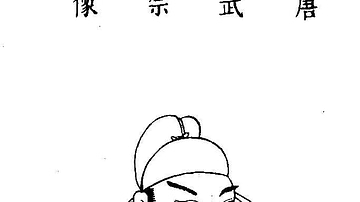
Emperor Wuzong of Tang
Wuzong of Tang (also Wu-Tsung, formerly Li Yan) reigned as emperor of China from 840 to 846 CE. He is best remembered today for his persecution of Buddhists, the worst such attack in all of China's history, and his early...

Definition
Grossmunster
Grossmünster (“large cathedral” in German) is a Romanesque ex-cathedral situated in the heart of Zürich, Switzerland, which was built over the course of the 11th and 13th centuries CE. According to legend, the Holy Roman Emperor...

Definition
Field of Reeds (Aaru)
A'Aru (The Field of Reeds) was the Egyptian afterlife, an idealized vision of one's life on earth (also known as Sekhet-A'Aru and translated as The Field of Rushes). Death was not the end of life but a transition to another...

Definition
Andrea Palladio
Andrea Palladio (1508-1580 CE) was an Italian Renaissance architect most famous for the villas he designed in and around Vicenza and two large churches in Venice. Palladio blended elements of classical architecture, particularly...

Definition
Scythian Warfare
Scythian warfare used state-of-the-art recurve bows and hit-and-run tactics against set infantry formations. Working from nimble horses, Scythian warriors could unleash a cloud of lethal arrows. Known, too, for their innovative...

Definition
George IV of Great Britain
George IV of Great Britain (r. 1820-1830) was the fourth of the Hanoverian monarchs. He first reigned as Prince Regent from 1811 for his mad father George III of Great Britain (r. 1760-1820). George IV was an unpopular...

Definition
Peter the Great
Peter I of Russia (Peter the Great) was the Tsar of Russia from 1682-1721 and Emperor of Russia from 1721-1725. During his long reign, Peter had absolute power and brought real change to Russia, including building its first navy...

Definition
Philip Sidney - The Gentleman-Poet of Elizabethan England
Sir Philip Sidney (1554-1586) was an English poet, scholar, soldier, and courtier, one of the most prominent figures at the court of Queen Elizabeth I of England (r. 1558-1603). During his lifetime...
