
Search

 This answer was generated by
 Search Results

Definition
Neo-Assyrian Empire
The Neo-Assyrian Empire (912-612 BCE) was the final stage of the Assyrian Empire, stretching throughout Mesopotamia, the Levant, Egypt, Anatolia, and into parts of Persia and Arabia. Beginning with the reign of Adad Nirari II (912-891 BCE...

Image Gallery
A Gallery of Neo-Assyrian Kings
The Neo-Assyrian kings are among the best-known of the Assyrian Empire and include Tiglath Pileser III, Shalmaneser III, Sargon II, Sennacherib, Esarhaddon, and Ashurbanipal. The term Neo-Assyrian is a modern-day designation; the Assyrians...

Article
Dogen's One Bright Pearl & the Neo-Confucian Pattern
The concept of Oneness is expressed repeatedly in philosophical works both in the east and west. Whether one is reading the Paradoxes of Zeno of Elea (l. c. 465 BCE) or the treatises of Wonyho (l. 617-686 CE) the concept of the One is impossible...

Article
Wall Reliefs: Apkallus of the North-West Palace at Nimrud
Religion is the sigh of the oppressed creature, the heart of a heartless world, and the soul of soulless conditions. It is the opium of the people. (Karl Marx, Critique of Hegel's Philosophy of Right). When it comes to religion, many people...
Image
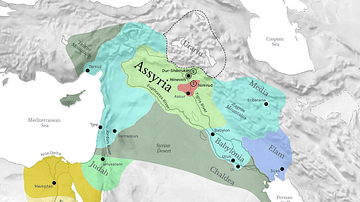
Neo-Assyrian Empire c. 912-612 BCE
Map of the Neo-Assyrian Empire c. 912-612 BCE, showing expansion by Shalmeneser III (r. c. 859-824 BCE), Tiglath-Pileser III (r. c. 745-727 BCE), Sargon II (r. c. 722-705 BCE), Sennacherib (r. c. 705-681 BCE), and Ashurbanipal (r. c. 688-627...

Image
Map of the Neo-Assyrian Empire
The Neo-Assyrian Empire emerged out of a renewed phase of Assyrian state-building in northern Mesopotamia, transforming an earlier regional kingdom into a powerful, expansionist empire. Beginning with rulers such as Adad-nirari II (reign...
Image
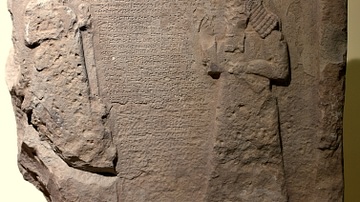
Neo-Assyrian Political Pact Stele, Al-Anbar
Only this fragment of a large stele has survived. On the surface, the Assyrian and Babylonian kings were carved in relief. The cuneiform inscription narrates a political treaty between them. The faces of the kings were deliberately vandalized...
Image
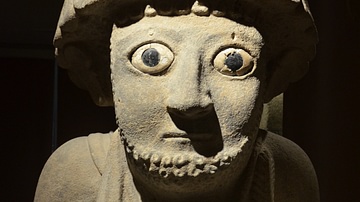
Neo-Hittite King Suppiluliuma
Neo-Hittite statue of King Suppiluliuma unearthed in 2012 at Kunulua, the capital of the Neo-Hittite Kingdom of Patina (1000-738 BCE) in southeastern Turkey. The remains of the figure stand approximately 1.5 meters in height, suggesting a...

Article
Wall Reliefs: Ashurnasirpal II's War Scenes at the British Museum
The Mighty King 600 of their warriors I put to the sword and decapitated; 400 I took alive; 3,000 captives I brought forth; I took possession of the city for myself: the living soldiers, and heads to the city of Amidi the royal city, I sent...

Video
A Short History of Assyria and the Neo-Assyrian Empire
Assyria has a long history, beginning in northern Mesopotamia and then expanding during the Neo-Assyrian Empire from Mesopotamia through Asia Minor, and down through Egypt. The empire began in the city of Ashur and went through many different...
