
Search
Did you mean: Muse?
Remove Ads
Advertisement

 This answer was generated by
 Search Results

Article
The Early History of Clove, Nutmeg, & Mace
_et('6');
The spices clove, nutmeg, and mace originated on only a handful of tiny islands in the Indonesian archipelago but came to have a dramatic, far-reaching impact on world trade. In antiquity, they became popular in the medicines of India and...
Image
Mace Surrounding Nutmeg Seed
_et('6');
Mace surrounding nutmeg seed.
Image
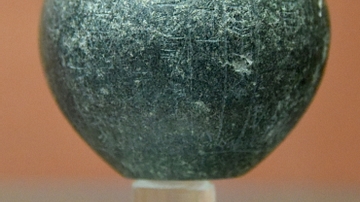
Votive Mace Head from Lagash
_et('6');
This mace head was inscribed with a cuneiform text. The text says that the mace is dedicated to the god Kindazi by the lady Ninkagina, both on her own behalf and that of Nam-mahani, who was a king of Lagash. The mace head itself has a name...
Image
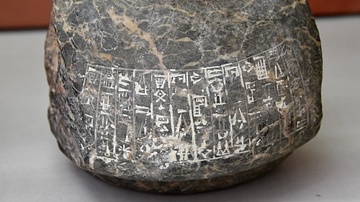
Votive Mace Head of Ur-Ningirsu II from Girsu
_et('6');
This grey stone mace head was inscribed with a cuneiform text. The text says that this mace head was dedicated to the god Ningirsu by Ur-Ningirsu II (son of Gudea, ruler of Lagash). From Girsu, Sothern Mesopotamia, modern-day Iraq. Circa...

Image
Votive Head Mace of La-arab, King of Gutium
_et('6');
This partially mutilated head mace was inscribed with an Akkadian cuneiform script, which mentions that this stone head mace is a votive offering dedicated by La-arab, king of Gutium. Although they left little evidence of their rule, it appears...

Image
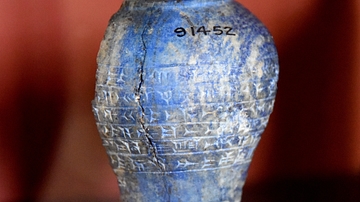
Votive Mace Head of Shulgi
_et('6');
This marble votive mace head was inscribed with a cuneiform text. The text says that this mace head is a dedication on behalf of Shulgi, a king of Ur III, to the god Meslamtaea, or Nergal. From Mesopotamia, modern-day Iraq. Neo-Sumerian Period...
Image
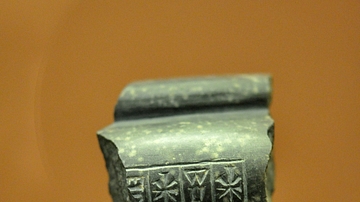
Portion of a Lapis Lazuli Head-Mace from the Temple of Ninurta
_et('6');
This fragment of a lapis lazuli Head-mace was inscribed with six lines of cuneiform inscriptions. The name of Ashurnasirpal II (reigned 884-859 BCE) was mentioned in this dedicatory text. Neo-Assyrian Period, 9th century BCE. From the Temple...
Image
Votive Mace of Gudea
_et('6');
This votive stone mace head was polished and incised with four lines of cuneiform inscriptions. It was a dedication to the god Igalim by Gudea, ruler of Lagash. Lagash II period, c. 2150 BCE. From Lagash, Southern Mesopotamia, modern-day...
Image
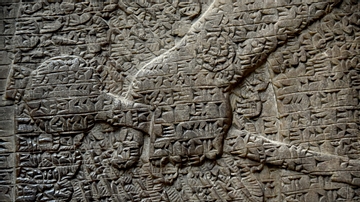
Apkallu Mace
_et('6');
Alabaster bas-relief detail showing the mace of an Apkallu. Neo-Assyrian Period, 865-860 BCE. Detail of Panel 26, Room B (Throne Room), the North-West Palace at Nimrud, modern-day Iraq. (The British Museum, London)
Image
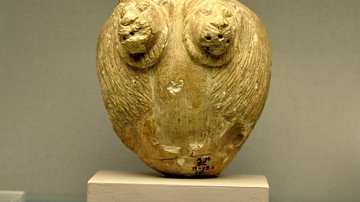
A Stone Mace Head with Lions
_et('6');
This is a symbolic weapon which was dedicated to a temple in order to receive gods' blessings. The lions' heads represent power and reflect the fact the donor was a royal person. Early dynastic period, 2500 BCE, from Sippar, Mesopotamia...
