
Search
Did you mean: Hermes?
Remove Ads
Advertisement
Search Results

Image
Saalburg Roman Fort, Germany
The Saalburg is a reconstructed Roman cohort fort located northwest of Bad Homburg in Hesse (Germany) and belonging to the Limes Germanicus. This fort served for 150 years as a base for frontier troops stationed along...
Image
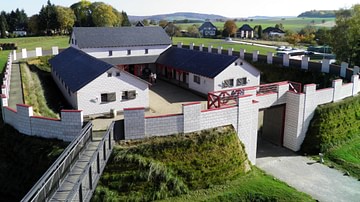
Reconstructed Roman Fortlet in Pohl, Germany
The Limes Fortlet in Pohl (German Limeskastell Pohl) is an authentic replica of a small limes fort with a watchtower. It is designed as an open-air museum and gives a vivid and plausible impression of life...

Image
Map of the Hadrian’s First Imperial Tour, 121–125 CE - Frontier Inspection, Hadrian’s Wall and Provincial Rule
Hadrian’s first great imperial tour (121–125 CE) transformed travel into an instrument of government across the Roman Empire. Leaving Rome in 121 CE, Hadrian...

Image
Map of the Hadrian’s Second Eastern Tour, 128–133 CE - Greek Culture, Eastern Diplomacy and the Crisis in Judaea
Hadrian’s second eastern tour (128–133 CE) was the longest and most complex journey of his reign, combining cultural patronage, diplomacy, provincial...

Article
Sugar & the Rise of the Plantation System
From a humble beginning as a sweet treat grown in gardens, sugar cane cultivation became an economic powerhouse, and the growing demand for sugar stimulated the colonization of the New World by European powers...

Article
Battle of Teutoburg Forest
At the Battle of Teutoburg Forest (aka Battle of Varus), c. 9 CE, a combined force of Germans annihilated a Roman army consisting of three legions including three squadrons of cavalry and six cohorts of auxiliary troops...

Article
Epona
Epona was a Celtic goddess. Her name contains an allusion to the horse: in Celtic, "epos" means “horse” and the suffix “-ona” affixed simply means “on”. Epona is the patron goddess of mares and foals. The oldest information about the...
Image
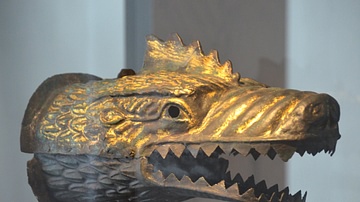
Niederbieber Draco
The Draco standard of Niederbieber, the only fully preserved draco military standard. This copper alloy object was discovered in the Limes fortress of Niederbieber in Germany. The Draco was adopted first into the Roman cavalry...
Image
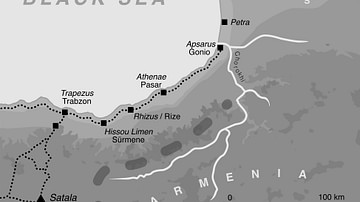
The Caucasian Frontier of the Roman Empire
A map showing the auxiliary forts located on the eastern end of the Black Sea during the reign of Roman emperor Hadrian (r. 117-138 CE). The Caucasus region was part of the eastern frontiers of the Roman Empire...
Image
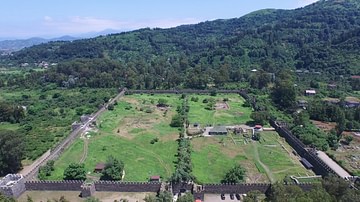
Aerial view of the Roman Fort of Apsarus
Aerial view of the Roman fort Apsarus, located in western Georgia, 15 kilometres (9.3 mi) south of Batumi near the Turkish border. Established on the left bank of the mouth of the Chorokhi River in the 1st...
