
Search
Did you mean: Kadesh?
Remove Ads
Advertisement

 This answer was generated by
 Search Results
Image
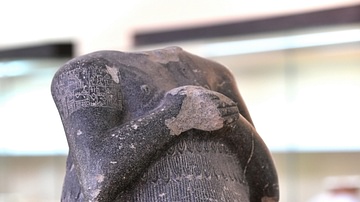
Headless Statue of Entemena of Lagash
This black diorite statue depictes Entemena, a king (or ruler) of Lagash, around 2400 BCE; identified by the cuneiform inscriptions on the right shoulder and back. The king wears the typical flounced Sumerian...
Image
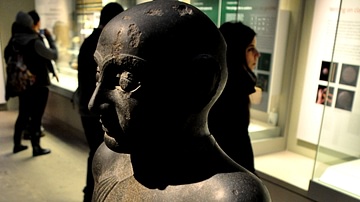
Dolerite Statue of Gudea, ruler of Lagash
Dolerite statue of Gudea, ruler of Lagash. Upper part of standing figure with head; carved and polished mottled green dolerite; but neck restored; represents Gudea, king of Lagash. It is possible that the head...
Image
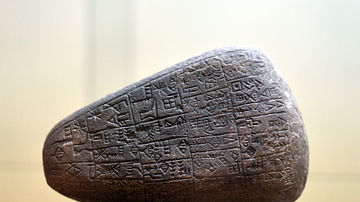
Stone Pebble of Prince Eannatum of Lagash
A variety of pebbles, clay tablets, and plaques were found at the ancient city of Lagash and girsu. The cuneiform inscriptions mention on them the name of Eannatum, prince and ruler of Lagash. The narration...
Image
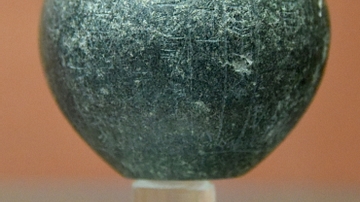
Votive Mace Head from Lagash
This mace head was inscribed with a cuneiform text. The text says that the mace is dedicated to the god Kindazi by the lady Ninkagina, both on her own behalf and that of Nam-mahani, who was a king of Lagash. The mace...

Image
Gudea of Lagash
Seating diorite statue of Gudea, prince of Lagash, dedicated to the god Ningishzida, excavated in Telloh (ancient Girsu), Iraq, dating to the Neo-Sumerian period, c. 2120 BCE.
Louvre, Paris.
Image
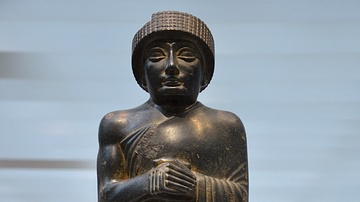
Gudea, Prince of Lagash
Diorite statue of Gudea, prince of the state of Lagash in Southern Mesopotamia who ruled c. 2144–2124 BCE. From Girsu (Irak), around 2120 BCE. Louvre Lens, France.
Image
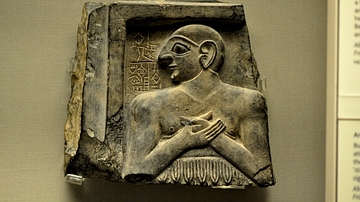
King Enannatum I of Lagash
The inscriptions on this stone plaque mention the name of Enannatum I, king (or ruler) of Lagash. The plaque was fixed to a wall of a shrine or temple. The king's hands are folded in a worship position. c. 2420 BCE, from...
Image
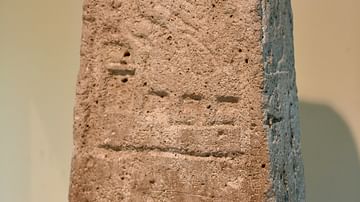
Obelisk of Ur-Nanshe from Lagash
This large white limestone obelisk was found in Lagash, southern Mesopotamia, in modern-day Iraq. All of the 4 aspects of the obelisk were carved, in reliefs, with different scenes. The frontal surface depicts...
Image
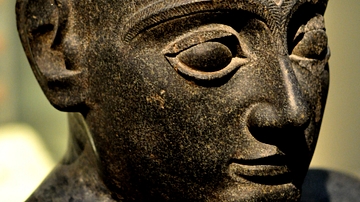
Head of Dolerite Statue of Gudea of Lagash
It is possible that the head and body were not originally part of a single statue. From Girsu (modern Telloh), southern Mesopotamia, Iraq, reign of Gudea, c. 2130 BCE. (The British Museum, London)
Image
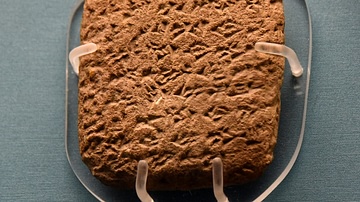
Amarna Letter from Shipti Ba'al of Lagash
This clay tablet is part of the Amarna letters. This letter was sent from Shipti Ba'al, who reassures the Egyptian pharaoh of his loyalty. The letter was written in Babylonian cuneiform inscriptions. 14th century...
