
Search
Remove Ads
Advertisement
Search Results
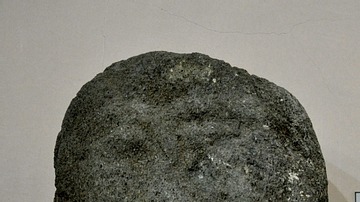
Image
Head of a Bearded Man from the Musasir Kingdom
This is the upper part of a sandstone statue which was found near Rowanduz village, modern Sulaimaniya Governorate, Iraq. The lack of inscriptions on this statue make it difficult to determine who this bearded man was. The statue is from...

Image
Map of the Kingdom of the Vandals (435–534 CE)
The Kingdom of the Vandals and Alans (435–534 CE) emerged as one of the most significant post-Roman states in the western Mediterranean. Founded after the Vandals, a Germanic people originally from Central Europe, and the Alans, an Iranian-speaking...

Image
Map of the New Kingdom of Egypt, 1450 BCE
A map showing the maximum territorial extent of the New Kingdom of Egypt, ca. 1450 BCE.

Image
Magadha Kingdom
A map showing the extent of the ancient kingdom of Magadha in India from the 6th to 4th century BCE.
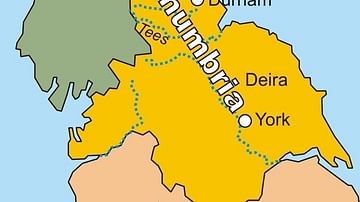
Image
Map of the Kingdom of Northumbria
A map of the Kingdom of Northumbria (c. 604-954 CE) in the northeast of Britain c. 802 CE.

Image
Map of Kingdom of Mercia
A map showing the greatest extent of the Kingdom of Mercia (c. 527-879 CE), an Anglo-Saxon political entity located in the midlands of present-day Britain

Image
Royal Sceptre, Kingdom of Kongo
A gold sceptre used by the kings of the Kingdom of Kongo (14-19th century CE). 17th century CE (?). (Royal Museum of Central Africa, Brussels, Belgium)
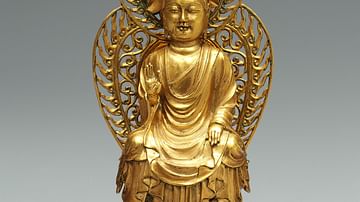
Image
Unified Silla Kingdom Gold Buddha
A gold Buddha statuette from the Unified Silla Kingdom (668-918 CE), Korea. From a stone pagoda at the Hwangbok-sa temple site, Gyeongju before 706 CE. Height 12.5 cm (National Museum of Korea, Seoul, South Korea)
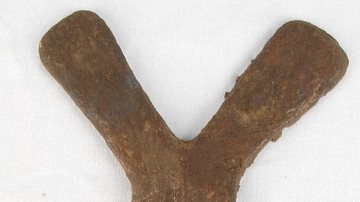
Image
Copper Curency Ingot, Luba Kingdom
A copper cross used as a currency by such central African states as the Kingdom of Luba (15-19th century CE). Height: 19.5 cm. (British Museum, London)
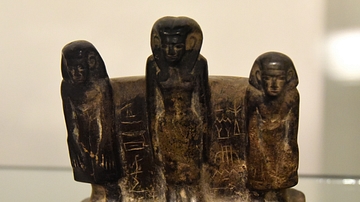
Image
Woman & Two Sons, Middle Kingdom Statuette
This is a steatite statuette which depicts 3 standing persons. The woman stands in the middle (her name is Aa-Nubt) and her sons (Khenti-Khati-Hetep and Maat-Neferu) flank her on either side. From Egypt, precise provenance of excavation is...
