
Search
Remove Ads
Advertisement
Search Results

Image
Map of the Four Khanates of the Mongol Empire, c. 1300
This map illustrates the four major khanates that emerged from the Mongol Empire in the early 14th century, following the fragmentation of the vast domain once ruled by Genghis Khan (circa 1162 to...

Definition
Leo III
Leo III was emperor of the Byzantine Empire from 717 to 741 CE. He founded the Isaurian dynasty which ruled until 802 CE. The emperor was a talented administrator, and he revamped the empire's political apparatus and legal code. Leo's...

Definition
First Anglo-Afghan War
The First Anglo-Afghan War (1838-42) was fought between the British East India Company (EIC) and, the Emirate of Afghanistan, the ultimate victor. The British were keen to control Afghanistan as they feared Russian expansion...
Definition
Basil I
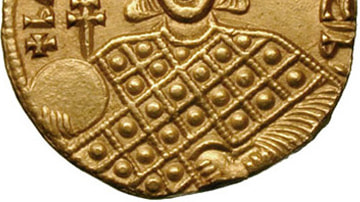
Basil I was emperor of the Byzantine Empire from 867 to 886 CE and he founded the "Macedonian" dynasty which lasted for over 200 years. Basil was an Armenian from a humble background who had risen to become the second most powerful man...

Article
Royal Women in the Mughal Empire
It was not only the Mughal emperors that left an indelible mark in the history of the Indian subcontinent but also the queens and princesses. The latter's contributions to art, architecture, literature, cuisine, refinement...

Definition
Frederick II
Frederick II (l. 1194-1250 CE) was the king of Sicily (r. 1198-1250 CE), Germany (r. 1215-1250 CE), Jerusalem (r. 1225-1228 CE), and also reigned supreme as the Holy Roman Emperor (r. 1220-1250 CE). He was born in Jesi in 1194 CE...

Definition
Islamic Caliphates
Caliphate (“Khilafat” in Arabic) was a semi-religious political system of governance in Islam, in which the territories of the Islamic empire in the Middle East and North Africa and the people within were ruled by a supreme...

Curriculum Collection
AP World History Unit 2 - Networks of Exchange (c. 1200-1450)
Between 1200 and 1450, the trade networks linking Afro-Eurasia intensified and reached further than ever before. The Silk Roads carried silk, porcelain, and paper westward across Central Asia...

Definition
Goryeo
Goryeo (Koryo) ruled Korea from 918 to 1392. The kingdom oversaw an unprecedented flourishing in culture and arts with developments in architecture, ceramics, printing, and papermaking. The kingdom was repeatedly invaded by the Mongols...

Definition
Constantine V
Constantine V, also known as Constantine the Dung-named by his enemies, was emperor of the Byzantine empire from 741 to 775 CE. He enjoyed military successes in the Middle East and Balkans but his reign is chiefly remembered for...
