
Search
Did you mean: Titian?
Remove Ads
Advertisement
Search Results

Definition
Ancient Greek Religion
In the ancient Greek world, religion was personal, direct, and present in all areas of life. With formal rituals which included animal sacrifices and libations, myths to explain the origins of mankind and give the gods a...

Definition
Neo-Assyrian Empire
The Neo-Assyrian Empire (912-612 BCE) was the final stage of the Assyrian Empire, stretching throughout Mesopotamia, the Levant, Egypt, Anatolia, and into parts of Persia and Arabia. Beginning with the reign of Adad Nirari...

Definition
Agrippina the Elder - Daughter of the Caesars
Agrippina the Elder (14 BCE to 33 CE), as the granddaughter of Emperor Augustus and the wife of the popular general Germanicus, wielded significant influence in the early years of the Roman Empire and was...

Definition
Hellenistic Warfare
When Alexander the Great died in 323 BCE, he left behind an empire devoid of leadership. Without a named successor or heir, the old commanders simply divided the kingdom among themselves. For the next three decades, they fought...
Definition
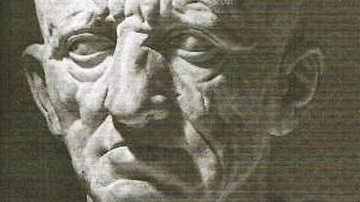
Cato the Elder
Marcus Porcius Cato, better known as Cato the Censor or Cato the Elder (234-149 BCE), was an influential political figure of the Roman Republic. Serving as quaestor, aedile, praetor, consul, and censor, he championed Roman virtues...

Definition
Fasces
The fasces were a bundle of rods and a single axe which were carried as a symbol of magisterial and priestly authority in ancient Rome. They featured prominently in important administrative ceremonies and public processions such as triumphs...

Definition
The Eumenides
The Eumenides is a play written by Aeschylus (c 525 – 455 BCE), the “Father of Greek Tragedy,” the most popular and influential of all tragedians of his era. The Eumenides was the third play of a trilogy, The Oresteia, with the...

Definition
Voltaire
Voltaire (1694-1778) was a French author, historian, and philosopher whose thoughts on religious toleration and moderation of authoritarian power were influential during the Enlightenment. His most famous work today is the satirical...

Definition
Honoré-Gabriel Riqueti, comte de Mirabeau
Honoré-Gabriel Riqueti, comte de Mirabeau (l. 1749-1791) was a French orator and nobleman who rose to prominence as a leader during the early stages of the French Revolution (1789-1799). From the disgraced...

Definition
Library of Pergamon
The Library of Pergamon was established in the city of Pergamon (also Pergamum) by the Attalid King Eumenes II (r. 197-159 BCE) and became the most famous and well-respected center of learning after the Library at Alexandria...
