
Search
Remove Ads
Advertisement
Search Results

Definition
Counter-Reformation
The Counter-Reformation (also known as the Catholic Reformation, 1545 to c. 1700) was the Catholic Church's response to the Protestant Reformation (1517-1648). It is usually dated from the Council of Trent in 1545 to the end...

Article
Six Great Heresies of the Middle Ages
The medieval Church established its monopoly over the spiritual life of Europeans in the Early Middle Ages (c. 476-1000) and consolidated that power throughout the High Middle Ages (1000-1300) and Late Middle...

Definition
Protestant Reformation
The Protestant Reformation (1517-1648) refers to the widespread religious, cultural, and social upheaval of 16th-century Europe that broke the hold of the medieval Church, allowing for the development of personal interpretations...

Article
Scripture, Faith, the Sacraments, and the Holy Spirit in Calvin’s Institutes
The Protestant Reformation was a period of religious history marked by a great defining, debating, and divergence on what it meant to be an orthodox, faithful Christian. To this...

Article
Diversity in Church Architecture in Medieval England
Medieval English churches differed in size and layout. Their original and evolving role(s), financial and material resources, and architectural fashions helped determine variability. However, their...

Definition
Joseph II, Holy Roman Emperor - The Great Enlightened Despot
Joseph II, Holy Roman Emperor (1741-1790), was the son and successor of Maria Theresa (1717-1780) and Francis Stephen, aka Francis I (1708-1765), of the imperial house of the Habsburgs. He governed...

Definition
Bohemian Reformation
The Bohemian Reformation (c. 1380 to c. 1436) was the first concerted effort by Catholic clergy to reform the abuses and corruption of the medieval Church. Bohemian clerics and theologians called for reform and, like later...
Definition
Jan Hus
Jan Hus (also John Huss, l. c. 1369-1415) was a Czech philosopher, priest, and theologian who, inspired by the work of John Wycliffe (l. 1330-1384) challenged the policies and practices of the medieval Church and so launched the Bohemian...

Article
France’s 1905 Law of Separation of Church and State
The 1905 Law of Separation of Church and State was enacted as the climax of decades of conflict between monarchists and anticlerical Republicans who viewed Christianity as a permanent obstacle to the...
Article
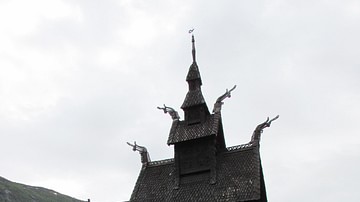
Stave Churches: Norway’s National Treasures
Stave churches are the most famous medieval buildings in Norway and are admired for their unique architecture and beautiful decorations. They are named after the staves or masts that hold up the main structure...
