
Search
Remove Ads
Advertisement
Search Results

Definition
Byzantine Coinage
The coinage of the Byzantine Empire continued that of its more ancient predecessors and functioned as a convenient method of payment for goods and services, especially to soldiers and officials, and as a means for people to pay...
Definition
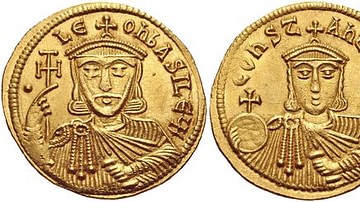
Leo V the Armenian
Leo the V the Armenian was emperor of the Byzantine Empire from 813 to 820 CE. He was of Armenian descent and the last ruler of the Isaurian dynasty which had been founded by Leo III (r. 717-741 CE). The emperor's reign, after...

Article
Byzantine Monasticism
Monasticism, that is individuals devoting themselves to an ascetic life in a monastery for devotional purposes, was an ever-present feature of the Byzantine empire. Monasteries became powerful landowners and a voice to be...

Definition
Theophilos
Theophilos was emperor of the Byzantine Empire from 829 to 842 CE. He was the second ruler of the Amorion dynasty founded by his father Michael II. Popular during his reign and responsible for a lavish rebuilding of Constantinople's...
Definition
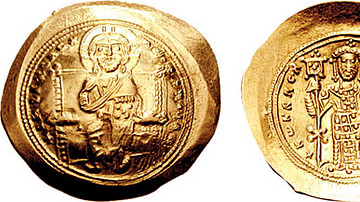
Constantine X Doukas
Constantine X Doukas was the ruler of the Byzantine Empire from 1059 to 1067 CE. During his reign, the Byzantine Empire was attacked by emerging enemies on all sides, including the Normans in Italy and the Seljuk Turks in...
Image
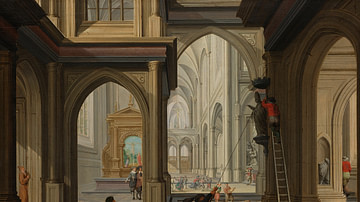
Iconoclasm in a Church
Iconoclasm in a Church, oil on panel painting by Dirck van Delen, the Netherlands, 1630.
Rijksmuseum, Amsterdam.

Definition
Nikephoros II Phokas
Nikephoros II Phokas was Byzantine emperor from 963 to 969 CE. Known as “White Death of the Saracens,” Nikephoros was a fearsome commander who conquered Crete, Cilicia, and much of Syria. While he is known as a great military...

Definition
Romanos IV Diogenes
Romanos IV Diogenes ruled the Byzantine Empire from 1068 to 1071 CE. He was a military emperor, and his policies and campaigns served to shore up Byzantine defenses against the Seljuk Turks. However, in the aftermath of the...

Definition
Byzantine Emperor
The Byzantine Emperor ruled as an absolute monarch in an institution which lasted from the 4th to 15th century CE. Aided by ministers, high-ranking nobility, and key church figures, the emperor (and sometimes empress) was commander-in-chief...

Article
Trade in the Byzantine Empire
Trade and commerce were essential components of the success and expansion of the Byzantine Empire. Trade was carried out by ship over vast distances, although for safety, most sailing vessels were restricted to the...
