
Search
Did you mean: Merlin?
Remove Ads
Advertisement
Search Results

Image
Men with Shields & Spears from Persepolis
Limestone wall relief showing two men carrying shields and spears. Their distinctive costume identifies them as members of an entourage from the Land of Skudra (Thrace). From Persepolis, the Palace Terrace...

Image
Assyrian Mercenaries
This gypsum wall panel depicts two bare-footed Assyria soldiers marching to the left. The bent tip on their helmets identify them as mercenaries. Neo-Assyrian Period, reign of Sennacherib, 704-680 BCE. From the South-West...
Image
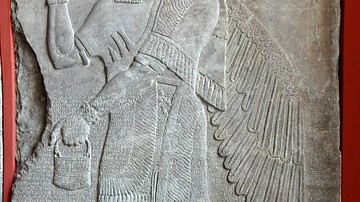
Assyrian Protective Spirit, Nimrud
Alabaster bas-relief, depicting a standing human-headed genie or sage, from the North-West Palace of Ashurnasirpal II at Nimrud, Mesopotamia, modern-day Iraq. Neo-Assyrian Empire, 9th century BCE. Apkallu, a protective...
Image
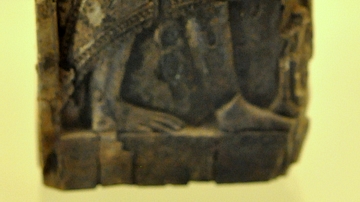
Carved Ivory from Sam'al
Ivory during the early ion age at Sam'al was used to decorate precious furniture and cosmetics boxes and most of them, when found, were burnt and charcolized by fire. Egyptianized scenes were the predominant ones. 9th to...

Image
Religious Scene from Sam'al
Silver plate depicting a ritual scene, from Sam'al/Zincirli, modern-day Southern Turkey, 9th-7th century BCE.
Pergamon Museum, Berlin.

Image
Statue of Governor Mentuemhat
Seated statue of Menuemhat. He was the governor of the District of Thebes. Granite. 25th/26th Dynasties, 690-610 BCE. From Karnak, Thebes, Egypt. (The Neues Museum, Berlin, Germany).

Image
Temple Relief of Nefertiti
The Egyptian queen, Nefertiti (c. 1370 - c. 1336 BCE), the Great Royal Wife of pharaoh Akhenaten (r. 1353-1336 BCE), appears beneath the rays of god Aten. Painted sandstone. New Kingdom, 18th Dynasty, c. 1350 BCE. From...

Image
Portrait of Pharaoh Akhenaten
Limestone fragment showing a portrait (in Amarna style) of the Egyptian pharaoh Akhenaten (r. 1353-1336 BCE) in profile, looking to the left. From Amarna, Egypt. New Kingdom, 18th Dynasty, c. 1340 BCE. It is on display...

Image
Later Form of Aten Cartouches
Three cartouches from House 47.10 at Amarna, Egypt. New Kingdom, 18th Dynasty, c. 1340 BCE. The one on the left, smaller than the other two, is the prenomen (throne name) cartouche of the Egyptian pharaoh Akhenaten...
Image
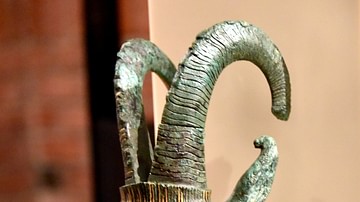
Head of an Ibex
This bronze and gilded head of an Ibex or a capricorn was part of sacred bark which might be carried on the shoulders of a procession of priests during rituals. Probably from Zagazig, Egypt. Third Intermediate Period, 21st Dynasty...
