
Search
Did you mean: Merlin?
Remove Ads
Advertisement
Search Results

Image
Goddess Nisaba
A fragment of a vase with a depiction of the goddess Nisaba (also Ninibgal or Nidaba), goddess of writing, learning, and the harvest. The cuneiform inscription on the vase mentions the name of Entemena, ruler of Lagash. Chlorite...

Image
Hecate Fighting the Giant, Pergamon Altar
On the left side the goddess Hecate is depicted while fighting the giant Clytius (she fights in three incarnations with a torch, a sword, and a lance); Detail from the Pergamon Altar's frieze (The frieze depicts...

Image
Foundation Figurine of a Kneeling God
Bronze foundation figurine, depicting a kneeling god holding an inscribed peg. From Southern Mesopotamia (modern-day Iraq), 2144-2124 BCE.
Pergamon Museum, Berlin.
Image
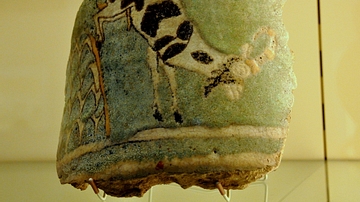
Colored Ceramic Fragment from Assur
This is a fragment of a colored ceramic vessel depicting a jumping male goat. Neo-Assyrian Period, 8th to 7th century BCE. From Assur (Ashur; modern-day Qal'at Sherqat). (Pergamon Museum, Berlin, Germany)
Image
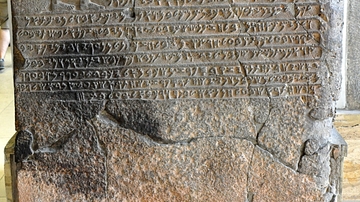
Stele of Prince Kilamuwa from Sam'al
This basalt stele was inscribed with Phoenician language. The upper part of the stele depicts Kilamuwa praying in front of symbols of deities. Circa 825 BCE. From one of palaces at the citadel of Sam'al/Zincirli...
Image
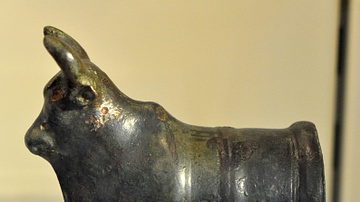
Bronze Bull from Sam'al
This bronze bull was probably part of a piece of furniture. 9th to 7th century BCE. From Sam'al/Zincirli, modern-day Southern Turkey. (Pergamon Museum, Berlin)

Image
Decorative Wall Tile from Kalhu
This tile once decorated one of the walls of the North-West palace at the ancient city of Kalhu. 9th century BCE. From Nimrud (Kalhu), Mesopotamia, modern-day Iraq. (Pergamon Museum, Berlin)

Curriculum Collection
AP World History Unit 5 - Revolutions (c. 1750–1900)
Two major revolutions remade the world between 1750 and 1900. The first was a revolution of the mind: thinkers of the Enlightenment argued that authority was based upon reason and consent, rather than...
Image
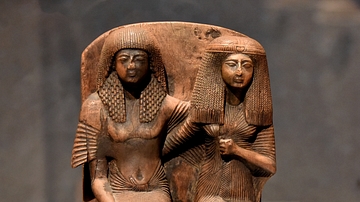
Seated Figure of Amenemope
Amenemope was a royal scribe. He sits on a claw-footed chair with his wife, Hathor, who is seated on a low stool (on a pillow). They embrace each other. Painted wood. From Tomb 265 (TT265) at Deir el-Madina, Western Thebes...
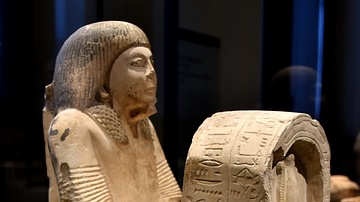
Image
Statue of Setau
Kneeling figure of Setau, Viceroy of Kush, holding a stela (stelophor).Limestone. New Kingdom, 19th Dynasty, reign of Ramesses II, 1279-1213 BCE. Probably from Abydos, Egypt. (The Neues Museum, Berlin, Germany).
