
Search
Remove Ads
Advertisement
Search Results
Image
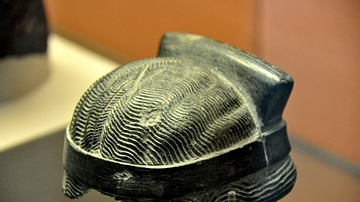
Stone Hair and Headdress of the God Lamma
On the back of this piece, there are cuneiform inscriptions that mention that this headdress was commissioned by a Bau-Ninam on behalf of King Shulgi of Ur. It is most likely that this headdress was to be put...
Image
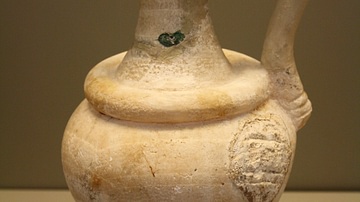
Minoan Stone Jug
A Minoan alabaster jug, Crete, 15th century BCE. (National Archaeological Museum, Athens)
Image
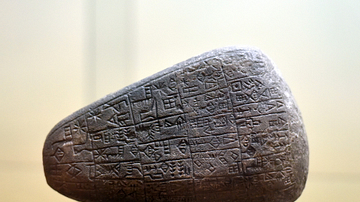
Stone Pebble of Prince Eannatum of Lagash
A variety of pebbles, clay tablets, and plaques were found at the ancient city of Lagash and girsu. The cuneiform inscriptions mention on them the name of Eannatum, prince and ruler of Lagash. The narration...

Image
Stone-carved Medusa head from the temple of Apollo at Didyma
This giant Medusa head was formerly part of a frieze on the architrave of the Apollo Temple at Didyma (Turkey).
Image
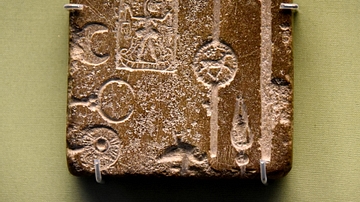
Stone Mould from Nineveh
This mould was used to make small and cheap metal amulets. One is an image of demonic Lamashtu, to keep her away from women and their new-borne infants. From Nineveh, Northern Mesopotamia, Iraq. Neo-Assyrian Period, 800-612...

Image
Stone Ruins from Arates Monastery in Armenia
Arates Monastery in Armenia is built on top of a hill and overlooks the Arates tributary of the Yeghegis River. The monastery's name came from the combination of “ari” ("come" in Armenian) and “tes” ("see"...
Image
Stone Coffin, Smyrna
This coffin was part of a larger necropolis in "Old Smyrna" (established in the 11th century BCE) and is believed to be from the 7th or 6th century BCE. The necropolis contained the remains of nobles who died after the attack...
Image
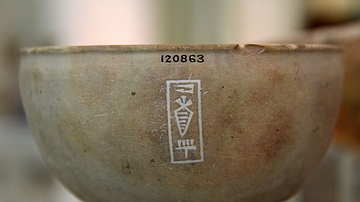
Stone Bowl Inscribed with the Name of Agirgal
Agirgal was probably the name of the owner of the bowl. It was found in grave PG33. Akkadian to Neo-Sumerian Period, 2300-2100 BCE. From the Royal Cemetery at Ur, Southern Mesopotamia, modern-day Iraq...

Image
Memorial Stone at Arates Monastery in Armenia
Arates Monastery in Armenia is built on top of a hill and overlooks the Arates tributary of the Yeghegis River. The monastery's name came from the combination of “ari” ("come" in Armenian) and “tes” ("see"...
Image
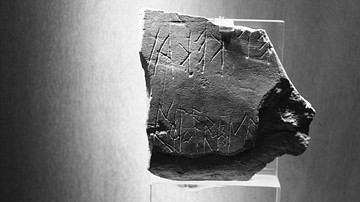
The Earliest Attic Graffito on Stone from the Acropolis
This is an amazing example of one of the earliest examples of Greek writing, dating to the 8th C. BC. It is written "boustrophedon", which means, rather than being read as English is, from left...
