
Search
Did you mean: Calypso?
Remove Ads
Advertisement
Search Results

Definition
Kingdom of Jerusalem
The Kingdom of Jerusalem was a state created in 1099 CE by Crusaders and western settlers after the First Crusade (1095-1102 CE). With Jerusalem as its capital, the kingdom was the most important of the four Crusader States...

Definition
Möngke Khan
Mongke Khan was ruler of the Mongol Empire (1206-1368 CE) from 1251 to 1259 CE. As the third Great Khan or 'universal ruler' of the Mongols, Mongke would oversee administrative reforms that continued to centralise government and ensure...

Definition
Basil II
Basil II (aka Basilius II) was the emperor of the Byzantine Empire from 976 to 1025 CE. He became known as the Bulgar-Slayer (Bulgaroktonos) for his exploits in conquering ancient Bulgaria, sweet revenge for his infamous defeat at Trajan's...

Definition
Cochineal
Cochineal is a brilliant red dye extracted from the crushed bodies of parasitic insects which prey on cacti in the warmer parts of the Americas. The dye was an important part of trade in ancient Mesoamerica and South America and throughout...
Definition
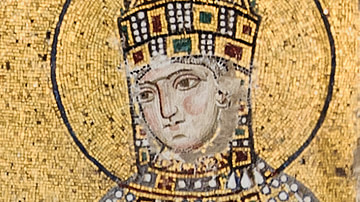
Empress Zoe - The Great Byzantine Ruler
Zoe Porphyrogenita was empress of the Byzantine Empire from 1028 CE until her death in 1050 CE. In an eventful career, she reigned alongside three husbands, had a hand in the succession of her adopted son, and...

Definition
Evliya Çelebi - The Most Famous Ottoman Traveler
Evliya Çelebi (1611 -1682/85) is the most famous Ottoman Turkish traveler and explorer. He is well-known for his ten-volume travelogue, the Seyahatnâme ('Book of Travels'), a monumental narrative of his...

Definition
German Crusade 1197-8 CE
The German Crusade of 1197 CE, also known as the 'Emperor's Crusade', was led by the Holy Roman Emperor Henry VI (r. 1191-1197 CE). Although the emperor died on his way east, his army did capture Beirut from the forces...
Definition
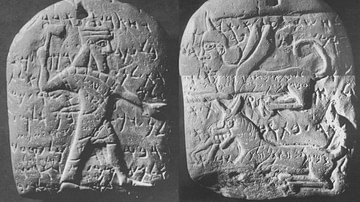
Arslan Tash Amulet
Dated to the 7th century BCE, the Arslan Tash amulet (AT1) was discovered in Arslan Tash, Syria and contains the writing of Phoenician, magic incantations. The limestone plaque includes a variety of features: incantations perceived...

Definition
Michael IV the Paphlagonian
Michael IV the Paphlagonian was Byzantine emperor from 1034 to 1041 CE. He had an affair with Empress Zoe, then married her and was crowned emperor after the death of her first husband, Romanos III. He ran a competent...

Article
Early Muslim Conquests (622-656 CE)
Islam arose as a religious and socio-political force in Arabia in the 7th century CE (610 CE onwards). The Islamic Prophet Muhammad (l. 570-632 CE), despite facing resistance and persecution, amassed a huge following...
