
Search
Remove Ads
Advertisement
Search Results

Image
Macedonian Burial Casket Decorations from Pydna
Grave goods from a male burial in the necropolis of Pydna, c. 330 BCE. Archaeological Museum of Thessaloniki, acc. no. Py4285. The ancient city of Pydna (near today's small town of Makrygialos) was...

Image
Burial Blocks at Lchashen in Armenia
Lchashen is a rich archaeological site in Armenia with Bronze Age burial crypts, cuneiform inscriptions, an Iron Age fortress, and a medieval church. Over 800 ancient burial sites have been discovered in the area...

Image
Porth Hellick Down Burial Chamber
This entrance grave burial mound also known as "The Great Tomb" stands upon Porth Hellick Down on the island of St. Mary's in the Isles of Scilly, UK. Part of a Bronze Age cemetery that was in use circa 2500 to 800...
Collection
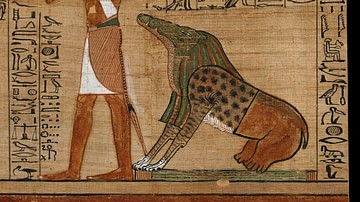
Funerary Rites, Burial, and the Afterlife of the Ancient Egyptians
Often misconstrued as a culture obsessed with death, the ancient Egyptians viewed death and the afterlife as an intimately connected continuance to life itself. Though funerary processions...

Image
Burial Chamber, Rock-Cut Tombs of Qizqapan
This is the left burial chamber at the rock-cut tombs of Ashkawt-i Qizqapan (Kurdish: The Cave of the Ravisher or the Cave of the Raped/Abducted Girl). This rectangular coffin was carved into the rocky floor...

Image
Gold Mycenaean Burial Mask
Beaten gold death mask from Grave Circle A, Mycenae, 16th century BCE. (National Archaeological Museum, Athens)
Image
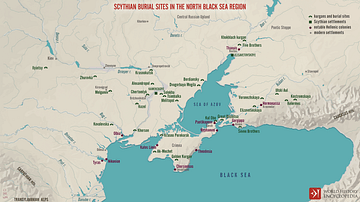
Scythian Burial Sites in the North Black Sea Region
A map illustrating the current archeological evidence for the spread of the Scythians in the northern Black Sea region. It shows the distribution of the most notable ‘kurgans’ and monumental burial...
Image
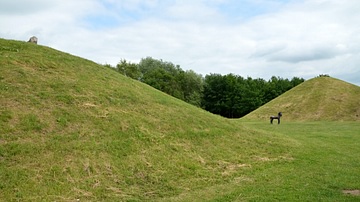
Celtic Burial Mounds
Reconstructions of Celtic burial mounds dating to the La Tène period (5th to 1st century BCE). The mounds were surrounded by circular ditches of 0.6 metres and 1.2 metres. European Archaeological Park of Bliesbruck-Reinheim...
Image
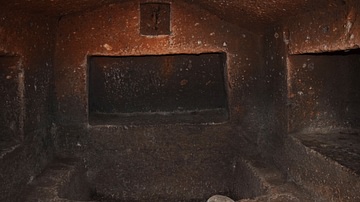
Urartian Burial Niche Interior at Agarak
This is a picture of an ancient Urartian burial niche at the Agarak archaeological site in what is present-day Armenia. It dates from roughly the 8th or 7th century BCE.

Image
Entrance to Urartian Burial Niche at Agarak
This is the entrance to an Urartian burial niche at the Agarak archaeological site in present-day Armenia. It dates from the 8th or 7th century BCE.
